Hire an AI SEO consultant when you need strategic depth from one named expert and have execution capacity in-house. Hire an AI SEO agency when you need throughput across a 10-person team executing simultaneously on content, technical, PR, and analytics. Most brands at scale need a hybrid: a consultant for strategy plus an agency partner for execution. Here is the honest framework.
This is the conversation I have on roughly half of my discovery calls. Founders and marketing leads know they need help with AI search. They are not sure whether the right shape of help is a consultant, an agency, or something in between.
Here is the practical breakdown, with pricing, scope, decision triggers, and the hybrid arrangement most brands above $5M revenue end up with.
At a glance
Hire a consultant for strategic depth from one named expert when you have execution capacity in-house. Hire an agency for throughput across a team doing content, technical, PR, and analytics at once. Most brands at $5M+ revenue need a hybrid: consultant for strategy, agency for execution.
| Engagement type | Typical AUD spend (per year) | What you get |
|---|---|---|
| AI SEO consultant only | $150K-$250K | 1 senior expert. Strategy, audits, hands-on execution. No team scale. |
| AI SEO agency retainer | $120K-$400K+ | Team of 3-10. Throughput across content, technical, PR, analytics. Less senior depth in day-to-day. |
| Hybrid (consultant + agency) | $200K-$500K | Senior strategy + team throughput. Most common shape at $5M+ revenue. |
| Project-based | $5K-$50K per project | Audit, strategy doc, schema upgrade, content cluster build. Time-boxed deliverables. |
The honest difference: depth vs throughput
Consultants and agencies both work on AI SEO. They work on it differently.
An AI SEO consultant is one senior expert giving you their direct attention. The work is concentrated, strategic, and deeply contextual. You get the depth of one person who has seen 50+ businesses run the same play.
An AI SEO agency is a team of 5 to 50 people executing across multiple workstreams in parallel. The work is broader, more parallel, and more transactional. You get the throughput of a team but typically not direct access to the senior strategist who set the direction.
Both can produce great results. They suit different operational shapes.
When to hire a consultant
Three patterns where a consultant is the right call.
1. You need strategic clarity before you hire execution. If you are not sure what your AI SEO strategy actually is, paying an agency to execute is premature. A consultant audits your situation, builds the roadmap, and either hands it off to your internal team or sets up an agency partner. The cost of strategy work without execution capacity is much lower than paying for execution that runs in the wrong direction.
2. You have internal execution capacity (content team, dev team) and need direction. If your in-house team can write content and ship technical changes, you do not need to pay an agency to do that work. You need a consultant who can give them the right brief and review the output. This is one of the most common shapes I work in. Internal team executes, I direct and audit.
3. You want a named expert involved at the senior level. Agencies typically front-load senior people for the pitch and hand the day-to-day to juniors. If you want a senior practitioner running the strategic work directly, that is a consultant model. The 14-year-experienced senior at an agency is rarely the person on your weekly call.
When to hire an agency
Three patterns where an agency is the right call.
1. You need throughput across multiple workstreams simultaneously. If you need 10 articles written, 3 technical fixes shipped, 5 PR placements earned, and a citation audit done in the same month, that is agency work. One consultant cannot deliver that throughput. A team can.
2. You have no internal SEO capacity and need an external function. If your team has zero SEO experience and you need someone to operate the entire function as an external resource, that is an agency. Consultants advise and audit. They are not a full marketing team.
3. You need full-stack delivery for predictable output. Agencies have processes, templates, junior layers, and quality assurance built for repeatable output. If your priority is consistent delivery rather than bespoke strategy, an agency is purpose-built for that.
The hybrid arrangement (what most $5M+ brands end up with)
The cleanest model for most brands above small-business scale is a hybrid: a consultant directing the strategy and a separate agency executing the workstreams.
Why this works:
- The consultant is the senior strategic mind, accountable for outcomes and direction
- The agency is the execution muscle, accountable for throughput and quality
- The consultant audits and approves the agency's work, creating a quality layer
- The brand gets both depth and throughput without paying for either at twice the price
This is exactly the model I run with most of my own clients. I act as the named senior AI SEO consultant on strategy. StudioHawk's team plugs in for execution where the brief calls for scale. The brand has one strategic point of contact (me) and one execution partner (the agency I lead as Chief of Staff). It is the same operational logic CMOs already use with creative and media: a strategist plus a delivery partner.
The cost works out roughly the same as a full agency retainer, but the strategic depth is materially higher.
Concrete example. A Melbourne ecommerce client at $14M revenue was paying $230K/year to an agency, getting fortnightly reports they did not understand and rankings that were not translating to revenue. We restructured the relationship: I took the strategy lead at $90K, kept the same agency on a reduced $140K execution retainer with a clearer brief. Same total spend. Six months later citation share had climbed from 12% to 41% of category queries, and organic revenue was up 38%. The unlock was not more spend. It was a clearer brief and a senior accountability layer the agency was not previously providing.
Pricing comparison
Note: agency retainers vary widely. The $120K floor is where serious AI SEO agencies start. Below that price point you are typically getting traditional SEO with AI buzzwords sprinkled on top, not the actual work.
For the live pricing breakdown across all four engagement tiers, see my transparent pricing section on the AI SEO Consultant page.
Five questions to decide which fits
Run through these. The answers will tell you what you need.
1. Do you have an in-house team that can execute briefs? Yes = consultant works. No = need an agency or consultant-with-agency-bench.
2. Is your bottleneck strategic clarity or execution throughput? Strategic clarity = consultant. Throughput = agency.
3. How many workstreams do you need to run in parallel? 1-2 = consultant. 3+ = agency or hybrid.
4. Do you want a named senior expert in the day-to-day work? Yes = consultant. No, I trust delegated execution = agency.
5. What is your annual budget? Under $150K = traditional SEO consultant or limited project work. $150K-$300K = consultant or smaller agency. $300K+ = hybrid model gives the best return.
What to ask either one before you sign
Whichever direction you go, ask the same five questions during evaluation:
- Show me a citation audit you ran for a real client. Anyone serious can produce one inside a week. If they cannot, they have not done the work.
- Walk me through your entity-graph methodology. If they look confused, they have not yet caught up to 2026 AI SEO. The right answer references @id pattern, sameAs arrays, cross-domain reinforcement.
- Who specifically will work on my account, and what is their experience? If the senior pitches and the junior does the work, that is fine but you should know it upfront.
- How do you measure citation share? The right answer involves multiple AI engines, statistical methodology (200+ runs per query for valid signal), and a documented baseline-and-track methodology.
- What is the minimum engagement length? Anyone promising AI SEO results in 90 days is not telling the truth. Real citation share takes 6-12 months to compound. Be wary of anyone pitching faster timelines.
If they cannot answer all five clearly, keep looking.
The pitch most agencies make (and why it falls apart)
Most agencies in Australia right now are pitching AI SEO as their existing SEO service deck with citations replacing rankings as the primary metric. The slides have been updated. The methodology often has not.
This works for the first 3 months. Then the client starts asking why they are not seeing citation lift, and the agency does not have a methodology that can produce it. The work grinds on without measurable improvement.
The right pitch references entity-graph engineering, structured citation auditing, content extractability work, and earned-media-as-AI-citation-source as core methodology, not as buzzwords. If the deck does not include those layers, the agency is selling repackaged 2022 SEO.
An independent AI SEO consultant who has actually run the work across 50+ brands can audit any agency pitch in 15 minutes and tell you whether the methodology is real or theatre.
The case for starting with a consultant even if you will eventually need an agency
If you are early in your AI SEO journey, my honest recommendation is to start with a consultant.
Three reasons:
1. The strategy work compounds. A 4-week strategic engagement with a senior consultant gives you the roadmap you would otherwise pay an agency 6 months to develop while they execute against it. The cost is materially lower for higher strategic value.
2. You can hire the right agency once you know the brief. Without a clear strategic frame, agency selection is guesswork. With one, you can evaluate agencies against a documented brief.
3. The consultant can audit the agency's work. The most expensive AI SEO programmes are the ones running in the wrong direction for 12 months. Having a consultant on retainer to audit agency output catches misalignment fast.
Once the strategy is clear and the work shape is understood, layering in agency throughput is the natural next step. Doing it the other way around is more expensive and slower.
Frequently asked questions
Can I just hire an in-house AI SEO specialist instead?
If you can find one, yes. The talent pool is narrow. Senior AI SEO practitioners with 50+ brand experience are rare and command $180K-$220K base in the Australian market right now, before equity. For most brands, hiring a consultant on retainer ($150K-$200K) is more cost-effective than hiring full-time, especially during the strategic build phase. Once the function is mature and predictable, in-house can make sense.
How do I know if an agency is doing real AI SEO or just rebranded SEO?
Three tests. First: ask for a citation audit they ran for a real client. Second: ask them to walk through their entity-graph methodology in detail. Third: ask for their measurement framework and whether it includes statistical citation tracking. If they fail any of those, the AI SEO label is marketing, not methodology.
What is the smallest budget that makes AI SEO consulting worthwhile?
The smallest meaningful engagement is a $10K-$20K project audit and roadmap. That gets you a citation baseline, gap analysis, and a prioritised 12-month strategy you can either execute internally or hand to a partner. Below that, you are looking at one-off training or strategy calls, which can be useful but rarely produce measurable visibility lift on their own.
Should I keep my existing SEO agency and just bring in an AI SEO consultant on top?
That is one of the most common arrangements I run. If your existing agency is doing solid traditional SEO work and you do not want to disrupt that, layering in a consultant for the AI strategy and entity work is clean. The consultant briefs the agency on what to add to existing workstreams. Get an AI SEO consultation to see if this hybrid fits your situation.
Is the hybrid model just consultant + agency, or are there other shapes?
The most common shapes I see: (1) consultant + existing SEO agency adding the AI layer, (2) consultant + new specialist AI SEO agency for full execution, (3) consultant directing in-house team, (4) consultant for strategy only with brand executing internally, (5) full agency retainer with senior consultant input on strategy. The right shape depends on existing resourcing, budget, and the rate of execution you need.
Talk to Lawrence directly
If you're shortlisting AI SEO consultants, the fastest way to get clarity is a free 30-minute consultation. I'll give you an honest assessment of where your brand sits in AI search today, where the highest-leverage moves are, and whether we're the right fit, no pitch deck.
See the full AI SEO Consultant service page for transparent pricing, process, case studies, and how I work.
Watch: He Built a $13M SEO Agency Using AI ft. Lawrence Hitches
Soaring Above Search
Weekly AI search insights from the front line. One newsletter. Six sections. Everything that actually moved this week, with a practitioner's take.
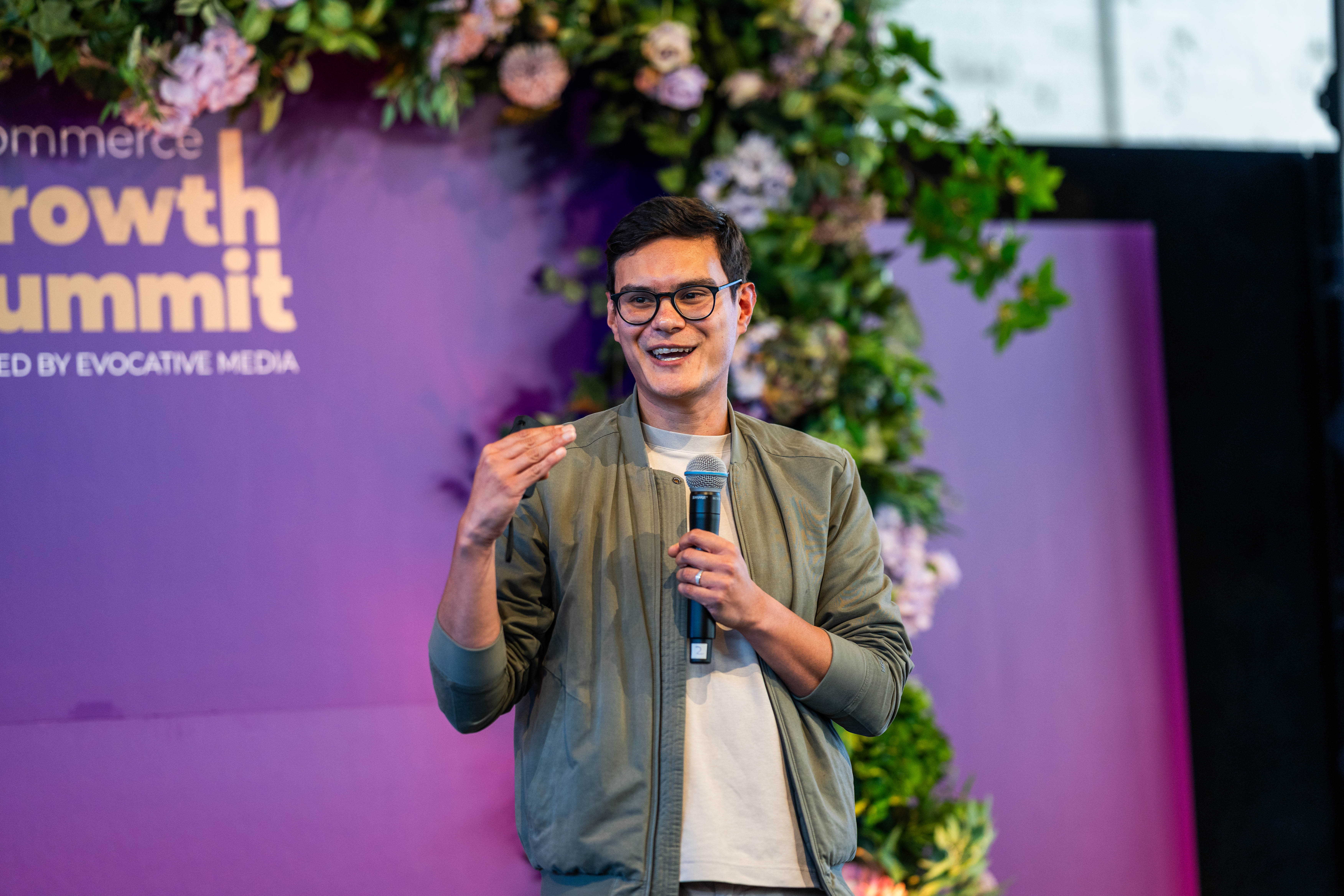
Chief of Staff at StudioHawk, Australia's largest dedicated SEO agency. Specialising in AI search visibility, technical SEO, and organic growth strategy. Leading a team of 120+ across Melbourne, Sydney, London, and the US. Book a free consultation →