These are the Claude prompts I use every day at StudioHawk. Across 300+ client sites. Every one of them tested, refined, and battle-hardened through real SEO work.
I'm not sharing hypothetical prompts. These are the ones saved in my Claude skills library that my team runs daily.
The Claude Skills the StudioHawk team runs across 500+ client SEO campaigns, open-sourced free (MIT licence) through Hawk Academy. Drop them into Claude Desktop and run agency-grade audits, content briefs, and reports.
Get the 29 Claude SEO Skills on GitHubWhy Claude Prompts Work Differently
Claude prompts for SEO are fundamentally different from ChatGPT prompts because Claude Code operates in your terminal with access to your actual files, APIs, and project data. A ChatGPT prompt says "suggest meta tags for this page." A Claude prompt says "read my site's posts.json, find pages with CTR below 2%, rewrite their meta descriptions, and push the changes via the WordPress API." The prompts below assume you're using Claude Code with access to your project directory.
Keyword Research Prompts
Claude handles keyword research differently from traditional tools. Instead of generating keyword lists from scratch (which it can hallucinate), the best approach is feeding it your Semrush or Ahrefs exports and having it cluster, map intent, and identify gaps. At StudioHawk, we export keyword data from Semrush, drop the CSV in the project folder, and let Claude build the topical map.
Read the keyword export at data/keywords.csv. Group these keywords into topical clusters based on search intent (informational, commercial, transactional, navigational). For each cluster, identify the pillar keyword, supporting keywords, and recommended page type (guide, product page, comparison, FAQ). Output as a table with columns: Cluster Name, Pillar Keyword, Volume, Intent, Page Type, Supporting Keywords.
Compare my sitemap at sitemap.xml against these competitor URLs: [paste competitor sitemaps]. Identify topics they cover that I don't. For each gap, note the competitor URL, their estimated word count, and whether this topic is within 2 hops of my central entity "[your entity]". Output as a prioritised list with columns: Topic, Competitor URL, Gap Priority (high/medium/low), Recommended Action.
Technical SEO Audit Prompts
This is where Claude Code dominates. It can read your robots.txt, parse your sitemap, check response headers, validate schema markup, and audit internal links. All from the terminal. These prompts replaced 3-4 separate tools in our StudioHawk workflow and cut technical audit time from 2-3 hours to 15 minutes per site.
Run a technical SEO audit on my site. Check: 1) robots.txt for blocked important paths, 2) sitemap.xml for missing pages, 3) response headers on the top 20 pages (check for correct canonicals, missing hreflang, redirect chains), 4) schema markup validation on 5 key pages, 5) internal linking structure (find orphan pages with zero inbound links). Output a prioritised action list with severity (critical/high/medium/low) for each issue found.
Read all HTML files in my output directory. For each page, count how many internal links point TO it and FROM it. Flag any page with fewer than 3 inbound links. For the top 20 pages by traffic (use this list: [paste URLs]), verify the first internal link to each page uses exact-match anchor text. Output: orphan pages list, under-linked pages, and anchor text audit results.
Content Optimisation Prompts
Content optimisation prompts work best when you give Claude the existing content plus the target query data. Feed it your page content alongside GSC query data showing what people actually search, and it can restructure the content to match real search intent. The key is providing data, not asking Claude to guess.
Read the article at [URL or file path]. Here are the top 20 queries driving impressions to this page from GSC: [paste queries]. Identify sections where the content doesn't directly answer these queries. For each gap, write a 50-150 word snippet lead paragraph that directly answers the query. Add it as the first paragraph after the relevant H2. Keep my existing content below it. Use Australian English. Write in a direct, practitioner voice.
Read the title tags and meta descriptions for all pages in my output directory. For each page, check: 1) title under 60 characters with primary keyword in first 5 words, 2) meta description 150-160 characters with a compelling hook and CTA. Flag pages that fail either check. For flagged pages, write 3 title options and 2 meta description options. Output as a JSON file I can feed into my build system.
Link Building and Digital PR Prompts
Claude accelerates link building prospecting by processing competitor backlink exports, identifying patterns, and personalising outreach at scale. The best workflow: export your competitor's backlink profile from Ahrefs, feed it to Claude, and have it categorise prospects by type (editorial, resource page, guest post, broken link) and priority.
Read the Ahrefs backlink export at data/competitor-backlinks.csv. Categorise each linking domain by type: editorial mention, resource page, guest post, directory, forum, social. Filter to domains with DR 30+ and traffic 1,000+/month. For each qualified prospect, draft a personalised outreach angle based on their content. Output as a spreadsheet with columns: Domain, DR, Traffic, Type, Contact Page URL, Outreach Angle.
Client Reporting Prompts
Reporting is where Claude saves the most time at StudioHawk. What used to take an analyst 2-3 hours per client now takes 15 minutes. Feed Claude the raw GSC and GA4 exports, and it generates formatted monthly reports with trend analysis, anomaly detection, and executive summaries. The consistency is better than manual reporting because Claude follows the same template every time.
Read the GSC data at data/gsc-export.csv and GA4 data at data/ga4-export.csv for [client name]. Generate a monthly SEO report covering: 1) Traffic summary (organic sessions, clicks, impressions vs previous month), 2) Top 10 growing pages with percentage change, 3) Top 10 declining pages with likely cause, 4) Ranking distribution (positions 1-3, 4-10, 11-20, 21+), 5) Top 5 new keywords entering the index, 6) 3-sentence executive summary for the CMO. Format as clean markdown.
Common Prompt Mistakes That Waste Your Time
The five most common Claude prompt mistakes in SEO: asking Claude to generate keyword data from memory (it will hallucinate volumes), writing vague prompts without specifying output format, not providing your actual site data (Claude works best with real files, not descriptions), asking for "SEO recommendations" without context (too broad to be useful), and not saving good prompts as reusable skills (you end up rewriting the same prompt every session).
| Mistake | What Happens | Fix |
|---|---|---|
| Asking for keyword volumes | Claude invents numbers | Export from Semrush/Ahrefs, feed the CSV |
| Vague output instructions | Unstructured wall of text | Specify: "Output as a table with columns: X, Y, Z" |
| No real data provided | Generic, unhelpful suggestions | Give Claude your actual files, exports, URLs |
| Too broad ("do SEO for my site") | Surface-level checklist | One task per prompt: "audit internal links" |
| Not saving as skills | Rewriting prompts every session | Save to SKILL.md, reuse forever |
When to Use a Prompt vs a Skill
Use a one-off prompt for exploratory tasks you might not repeat: analysing a specific competitor, investigating a traffic drop, or testing a new content angle. Use a Claude skill (saved SKILL.md file) for any workflow you'll run more than twice: monthly reporting, content refreshes, meta tag audits, internal link sweeps. At StudioHawk we have 40+ skills that standardise how we handle recurring SEO work across 300+ clients. The prompt is the prototype. The skill is the production system.
| Use Case | Prompt or Skill? | Why |
|---|---|---|
| Monthly client report | Skill | Same structure every month, different data |
| Investigating a traffic drop | Prompt | One-off analysis, unique context each time |
| Content refresh workflow | Skill | Same 4-step process on different articles |
| Competitor deep dive | Prompt | Different competitor each time, different angles |
| Internal link audit | Skill | Repeatable across every client site |
| Title tag A/B test ideas | Prompt | Creative task, different every time |
FAQ
Do these prompts work with Claude's free tier?
The simpler prompts (keyword clustering, content rewriting) work with Claude Pro ($20/month). The file-system prompts (technical audits, internal link analysis, batch meta rewrites) require Claude Code, which needs either API credits or a Claude Max subscription. Most SEO practitioners find the $20/month tier handles 80% of daily tasks.
Can I use these prompts with ChatGPT instead?
The content and keyword prompts translate to ChatGPT. The technical audit, file-system, and API integration prompts do not. ChatGPT cannot read your project files, run terminal commands, or push changes to your CMS. For those workflows, Claude Code is the only option. See the full comparison.
How do I save a prompt as a Claude skill?
Create a file called SKILL.md in your project's .claude/skills/ directory. Add a YAML frontmatter with name and description, then paste the prompt as the skill body. Every time you invoke the skill name, Claude follows the exact same workflow. Full guide to building skills.
Which prompt should I start with?
Start with the internal link audit. It is the highest-ROI prompt for most sites because internal linking directly affects rankings, it requires zero external data (just your site files), and the output is immediately actionable. Our last internal linking sweep drove +81% improvement in a SEOtesting test.
Do I need coding knowledge to use these prompts?
You need basic terminal comfort: opening a terminal, navigating to a folder, running a command. Claude handles all the technical work (writing scripts, parsing files, API calls). If you can type cd ~/my-project and press enter, you can use Claude Code for SEO.
For ready-to-run versions of this, see the ready-made Claude SEO skills, open source and free.
Soaring Above Search
Weekly AI search insights from the front line. One newsletter. Six sections. Everything that actually moved this week, with a practitioner's take.
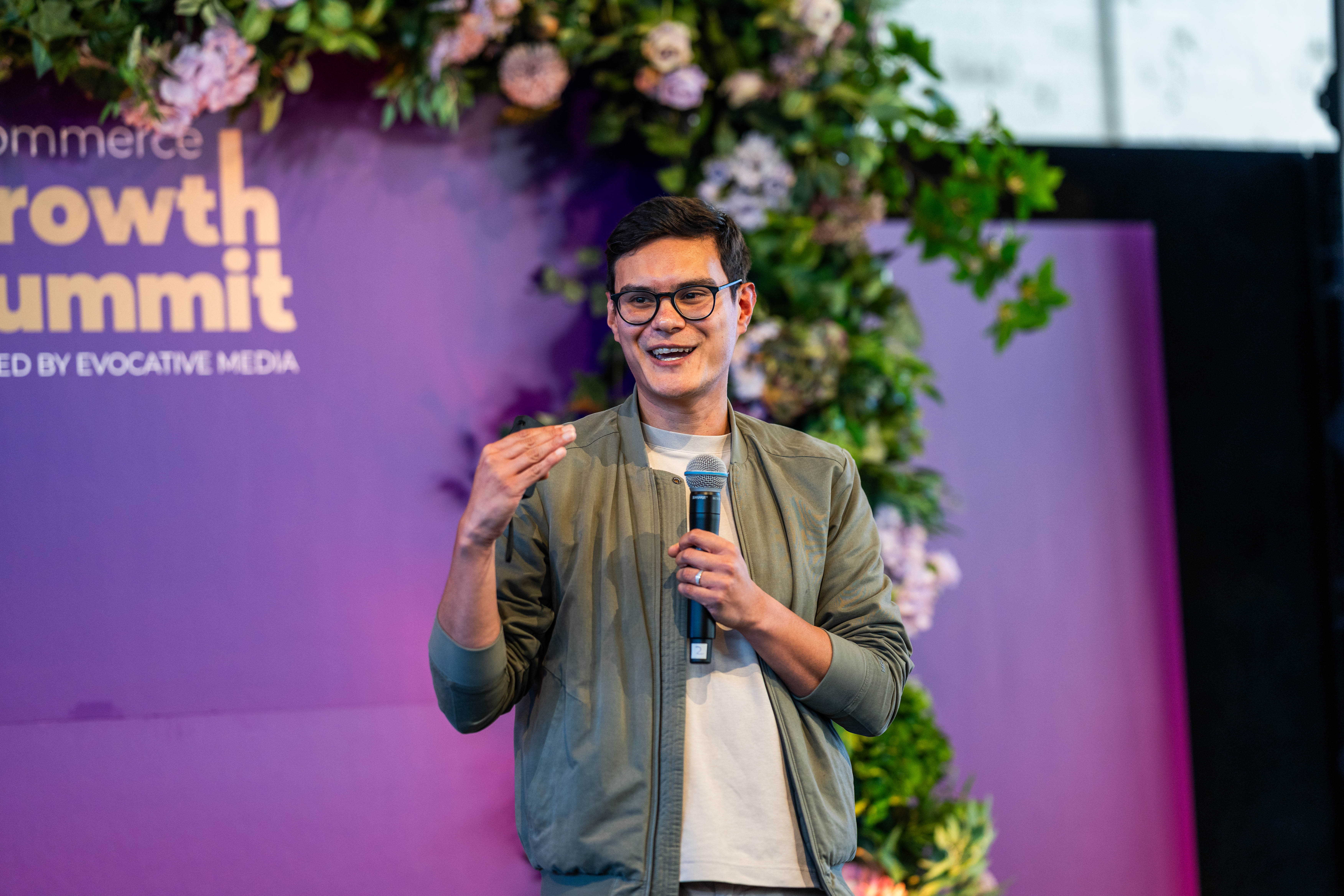
AI SEO consultant and AI search consultant helping brands appear in AI Overviews, AI Mode and ChatGPT. Chief of Staff at StudioHawk, Australia's largest dedicated SEO agency. Runs a measured three-channel playbook: Google, Bing and AI citations. Book a free consultation →