Rankings without revenue are vanity metrics. I've seen ecommerce sites double their organic traffic and see zero change in sales. The gap between traffic and transactions is where most SEO strategies fall apart.
This guide bridges ecommerce SEO and conversion rate optimisation (CRO). Because the best SEO strategy is one that actually makes money.
Why SEO and CRO Aren't Competing Priorities
There's a persistent myth that optimising for conversions means compromising SEO. Adding a popup kills rankings. Removing content boosts conversion. Changing page layout tanks organic traffic.
In reality, Google's ranking systems increasingly reward pages that satisfy user intent — and a page that converts well is, by definition, satisfying intent.
The overlap is bigger than most people realise:
- Page speed — Faster pages rank better AND convert better. A 1-second improvement in load time can increase conversion rate by 7%.
- Clear structure — Well-organised content with headings helps Google understand the page AND helps users find what they need.
- Trust signals — Reviews, security badges, and clear policies improve E-E-A-T signals AND reduce purchase anxiety.
- Mobile experience — Mobile-first indexing means Google evaluates your mobile site, which is also where 60%+ of ecommerce traffic converts.
Product Page Optimisation for Rankings AND Conversions
Your product pages need to serve two masters. Here's how to satisfy both.
Above the Fold
The area users see without scrolling is critical for conversion. Include:
- Product title (H1) — Keyword-rich but natural. This serves both SEO and user clarity.
- Price — Visible immediately. Hidden pricing kills conversion rates.
- Primary product image — High quality, zoomable, showing the product clearly.
- Add to cart button — Prominent, contrasting colour, above the fold on desktop and mobile.
- Star rating — If you have reviews, show the aggregate rating above the fold.
- Availability — "In Stock" or "Ships in X days" reduces uncertainty.
None of these elements conflict with SEO. In fact, they align with what Google's Product schema expects.
Below the Fold: The SEO Content Zone
This is where you add the content that drives organic rankings without cluttering the conversion-focused area above.
- Unique product description — 200-500 words minimum. Cover features, benefits, use cases, and specifications.
- Structured specs table — Dimensions, materials, compatibility. Helps SEO (keyword inclusion) and conversion (purchase confidence).
- User reviews — User-generated content that adds unique keywords and builds trust.
- FAQ section — Answer common pre-purchase questions. Targets long-tail queries and reduces support tickets.
Product Images That Sell and Rank
Images serve both SEO and conversion goals when done right:
- Use descriptive, keyword-relevant alt text (SEO)
- Include multiple angles — front, back, side, detail, in-use (conversion)
- Compress to WebP format with lazy loading (page speed = both)
- Add image schema for Google Images visibility (SEO)
Category Pages: The Overlooked Conversion Asset
Most ecommerce CRO focuses on product pages and checkout. But category pages are where browsing intent meets buying decisions.
Category Page CRO Elements
- Smart default sorting — Sort by bestsellers or relevance, not by newest or price. Your best-converting products should appear first.
- Quick-add to cart — Let users add products from the category grid without visiting each product page.
- Product card optimisation — Show price, rating, availability, and a clear product image on each card in the grid.
- Filter usability — Make filters easy to apply and remove. Show active filters clearly. Update results without full page reload.
Balancing SEO Content and Product Grid
Category page SEO typically requires 200-500 words of content. But pushing the product grid below the fold hurts conversion.
Solutions I've seen work:
- Short intro paragraph (50-100 words) above the grid, longer content below the grid
- Expandable content sections — Google crawls and indexes content in expandable sections (accordions, tabs)
- Sidebar content — On desktop, use the sidebar for category description and buying guidance
A/B Testing Without Killing Organic Traffic
CRO requires testing. But poorly implemented A/B tests can create SEO problems including cloaking, duplicate content, and noindex disasters.
Safe Testing Rules
- Use server-side testing — Client-side tools that modify the DOM can cause rendering issues for Googlebot. Server-side tests deliver clean HTML to all users, including search engines.
- Don't test title tags or H1s for conversion without monitoring rankings — These elements directly impact SEO. If you change them, track keyword positions throughout the test.
- Never redirect Googlebot to a specific variant — This is cloaking. All users (including bots) should have an equal chance of seeing any variant.
- Keep test durations reasonable — Run tests for 2-4 weeks, not months. Long-running tests with significantly different content can confuse Google about your page's content.
- Use rel=canonical on test variants — If your testing tool creates separate URLs for variants, canonicalise them to the original.
What to Test First
Prioritise tests that improve conversion without touching SEO-critical elements:
- CTA button colour, size, and copy
- Product image layout and size
- Social proof placement (reviews, trust badges)
- Price presentation format
- Shipping information visibility
- Product recommendation algorithms
Schema Markup for Conversion Visibility
Rich results don't just improve CTR — they pre-qualify traffic. When a user sees price, rating, and availability in the search results, they arrive on your page with clearer intent.
Essential ecommerce schema for conversion:
- Product schema with Offer — Shows price and availability in search results
- AggregateRating — Star ratings in SERPs increase CTR by 15-25%
- FAQ schema — Expands your SERP real estate and answers pre-purchase questions before the click
- BreadcrumbList — Shows site hierarchy in results, builds trust and navigational clarity
Measuring What Matters
Stop reporting on traffic alone. Here are the metrics that connect SEO to revenue:
Revenue Per Organic Session
Total organic revenue divided by total organic sessions. This is the single best metric for ecommerce SEO performance. If it's going up, your SEO strategy is working even if total traffic is flat.
Organic Conversion Rate by Landing Page Type
Segment your organic traffic by page type:
- Category pages — Expected conversion rate: 1-3%
- Product pages — Expected conversion rate: 2-5%
- Blog/content pages — Expected conversion rate: 0.5-1.5%
If any segment is significantly below these benchmarks, there's a CRO problem to investigate.
Assisted Conversions
Blog content rarely converts on the first visit. Use Google Analytics 4's conversion paths to see how organic blog visits contribute to later purchases. This justifies content investment that doesn't directly convert.
AI Search and Ecommerce Conversions
AI search engines are changing the conversion funnel. When ChatGPT or Perplexity recommends a product, users often arrive ready to buy — the research phase happened in the AI tool.
This means optimising for AI search can drive higher-converting traffic than traditional organic. Ensure your product data is structured, comprehensive, and crawlable so AI systems can accurately represent your products in their responses.
Frequently Asked Questions
Does adding content to product pages hurt conversion rates?
Not if you structure it correctly. Keep the conversion-critical elements (images, price, CTA) above the fold. Place SEO content below the fold or in expandable sections. Well-structured content actually builds purchase confidence and improves conversion.
Should I remove my blog if it doesn't convert?
No. Blog content builds topical authority, earns backlinks, and assists conversions through multi-touch journeys. Measure its impact through assisted conversions in GA4, not direct conversion rate.
How do I know if an SEO change hurt conversions?
Monitor revenue per organic session and organic conversion rate weekly. Set up alerts in GA4 for significant drops. When making SEO changes, document the date and scope so you can correlate any conversion changes.
What's more important — more traffic or better conversion rate?
It depends on where you're starting. If your conversion rate is below industry average (typically 1-3% for ecommerce), fix conversion first. You'll get more revenue from the traffic you already have. If conversion rate is healthy, focus on growing qualified organic traffic.
Soaring Above Search
Weekly AI search insights from the front line. One newsletter. Six sections. Everything that actually moved this week — with a practitioner's take.
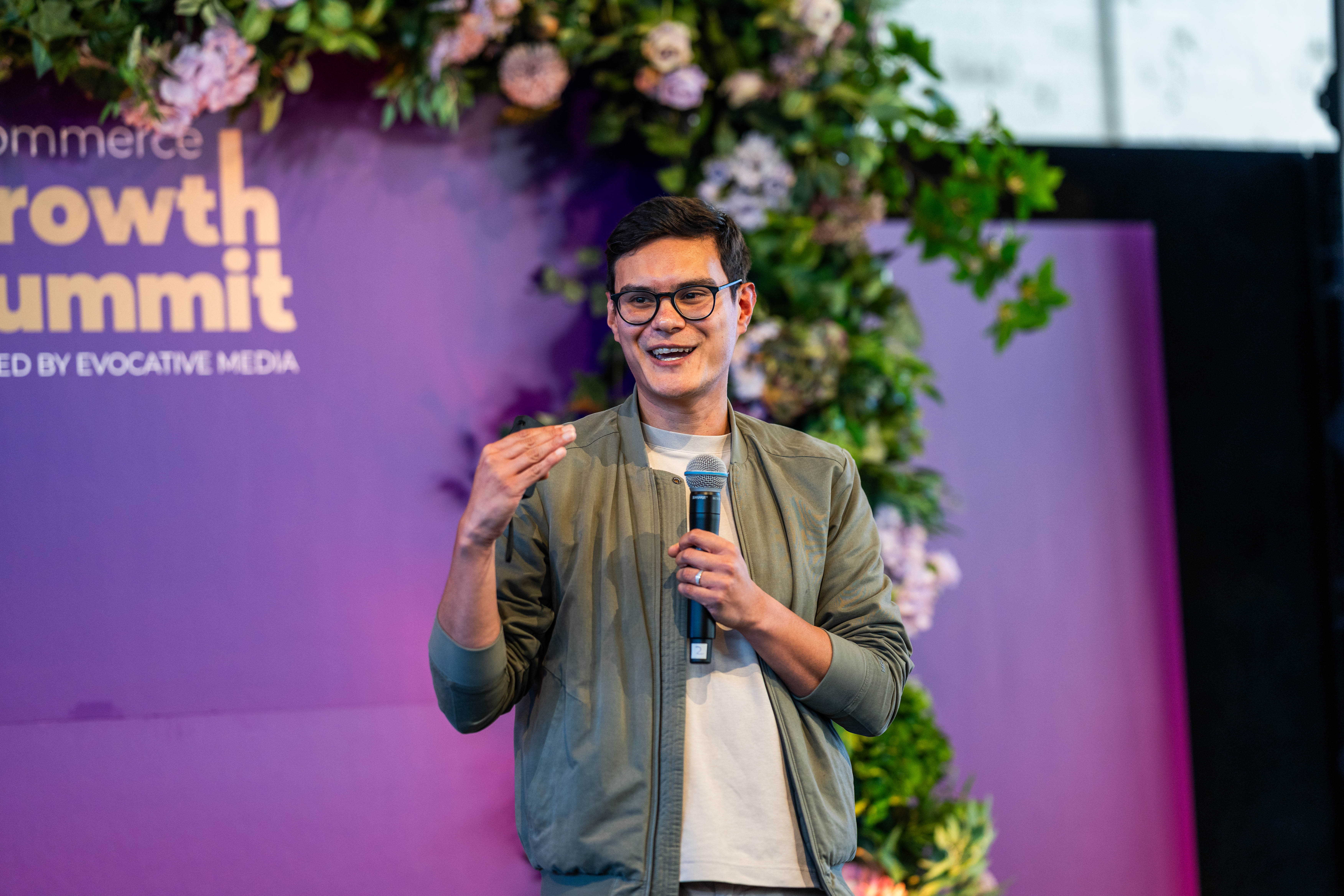
General Manager of StudioHawk, Australia's largest dedicated SEO agency. Specialising in AI search visibility, technical SEO, and organic growth strategy — leading a team of 115+ across Melbourne, Sydney, London, and the US. Book a free consultation →