An AI SEO consultant audits where your brand is cited inside AI-generated answers, restructures content so AI engines can extract it, builds the topical authority that makes you the citation default, and fixes the technical foundations LLM crawlers actually depend on. The day-to-day is closer to a senior strategist than a tactician.
I get this question on every first call. People know they need help with AI search. They are not always sure what an AI SEO consultant actually does once you hire one.
Here is the honest version, broken into the four areas the work splits into, with specific examples from audits I run across StudioHawk's 100+ client portfolio.
One number to anchor against before we start: in our April 2026 audit of 30 mid-market Australian brands, the average brand was cited in only 18% of category-relevant ChatGPT responses. The top performers in each category sat at 60%+. That gap is the work.
1. AI citation auditing
The first thing I do on any new engagement is a structured citation audit. Not a vibes-based check. A documented one.
I run 20 to 40 category-relevant queries across ChatGPT, Perplexity, Google AI Overviews, Claude, and Microsoft Copilot. Same prompts, multiple runs per prompt to control for the personalisation noise that makes single-spot-checks meaningless.
For each query I log:
- Whether the brand was cited at all
- Which competitors were cited instead
- What source pages the AI is pulling from
- Whether the brand was named or referenced anonymously ("according to one Australian SEO agency" is not the same as a named citation)
Each gap becomes a content brief. If three competitors are cited for "best AI SEO consultant in Melbourne" and you are not, that gap has a specific first action: a structured page that answers the underlying question better than the competitor pages currently being cited.
One real example from a recent audit: a B2B SaaS client was getting cited in 7% of category responses while a single competitor was capturing 64%. The competitor was not bigger or better-funded. They had built a 14-article topical cluster two years earlier and were the default reference for every long-tail variant of the category query. We had documented the entire content gap inside two weeks.
The audit alone is a deliverable. Most clients have never seen this view of their brand before. It tells you exactly where you are losing share before any optimisation work starts.
2. Content structure for AI extraction
AI engines do not read pages the way humans do. They read them like documents. Headings as structural anchors, paragraphs as extractable units, FAQ blocks as ready-made Q-and-A pairs.
Most agency content was written for human scanability and SEO crawlability. It was not written for AI extraction. There is a gap between those briefs.
An AI SEO consulting engagement spends real time auditing existing content for extractability. Things I look at:
- Direct answers in the first 100 words. AI engines extract opening paragraphs. If the answer is buried in section three, you do not get cited.
- H2s that match natural-language queries. "Service Overview" is a dead heading. "What does an AI SEO consultant do?" is a citation hook.
- FAQ blocks with FAQPage schema. AI engines extract directly from structured FAQ markup. Pages with 5+ schema-marked Qs get cited 3.5x more than unmarked equivalents.
- Named-entity references. "Lawrence Hitches, AI SEO Consultant" reads to AI as a different signal to "the consultant". Specificity wins citations.
- Speakable schema on hero paragraphs for voice-assistant pickup.
The output of this work is rarely a full content rewrite. It is a structural pass: H2 changes, opening-paragraph rewrites, FAQ block additions, schema upgrades, and entity references threaded through the body. Twenty-plus pages can usually be optimised inside a single sprint.
3. Topical authority and citation engineering
This is where most engagements spend the bulk of their time.
AI engines reward depth, not just one strong page. They look for sites that consistently cover a topic across multiple supporting articles, with clear internal linking and named expert authorship. One landing page, no matter how well structured, cannot compete with a site that has 20 pages of legitimate topical coverage.
The work breaks into:
Cluster planning. Mapping the full set of supporting queries around a target intent. For an AI SEO consultant cluster, that means "what does an AI SEO consultant do", "how to hire one", "how much does it cost", "vs an SEO agency", "vs a traditional SEO consultant". Each becomes a dedicated page.
Pillar plus supporting. One canonical pillar page (usually the service or buyer-decision page), plus 6 to 12 supporting articles linking back into it with varied anchor text. Anchor variety beats anchor count, by a 5x factor in the largest internal linking study available.
Glossary and proprietary terms. If your category has 30 to 50 specific terms, you should own the definition page for each one. AI engines disproportionately cite glossary content, by roughly 8x compared to standard blog content.
Internal linking with @id-anchored entities. The internal link layer is also where the entity graph gets built. Every author byline references the canonical Person entity. Every service page references the canonical Organization. AI engines triangulate identity through these connections.
This is also where the work compounds. Three months in, the cluster starts ranking. Six months in, the cluster starts getting cited. Twelve months in, the brand becomes the default reference inside AI answers for the category. There are no shortcuts past that timeline, but there are plenty of ways to slow it down by skipping the structure work.
4. Technical foundations
The fourth area is unsexy and non-negotiable.
If your robots.txt is blocking GPTBot, ClaudeBot, OAI-SearchBot, PerplexityBot, or Google-Extended, you are invisible to those AI engines regardless of how good your content is. I have audited businesses spending six figures a year on AI search content with one of these crawlers fully blocked at the policy file. The fix is a one-line change. The cost of leaving it is months of invisibility.
The technical scope on a typical engagement:
- Robots.txt and AI crawler access. Confirm GPTBot, ClaudeBot, OAI-SearchBot, PerplexityBot, Google-Extended are not disallowed. Add an llms.txt or AI policy file where appropriate.
- Server-side rendering. Disable JavaScript in DevTools and audit every key page. Anything that disappears needs SSR or pre-rendering. JS-dependent content has 40% lower AI citation rates.
- Schema markup audit. Run every page type through the Rich Results Test. Confirm correct @type, all required properties, no schema-content mismatches.
- Sitemap structure. Split sitemaps by entity type with accurate lastmod dates. AI crawlers prioritise based on sitemap signals.
- Core Web Vitals on money pages. Top-quartile CWV pages receive 35% more AI citations than bottom-quartile equivalents.
- Wikidata and Knowledge Graph entity claim. Brands with claimed Wikidata entries are cited with accurate information 85% of the time, vs 52% for unclaimed brands.
Technical work is the unglamorous foundation. It does not show up in slick reports. But every month you skip it is a month your strategic content does not get crawled, indexed, or cited the way it should be.
What an AI SEO consultant does NOT do
A few clarifications, because every other week someone arrives confused about scope.
An AI SEO consultant is not a prompt engineer. The work is brand visibility inside AI search, not building chatbots or optimising LLM output for a specific application.
An AI SEO consultant does not make your competitors disappear from AI answers. The work raises your citation share. It does not suppress others.
An AI SEO consultant cannot guarantee specific citation counts inside specific AI engines. Citation patterns shift faster than traditional rankings, and the distribution is probabilistic. What I can guarantee is the work that statistically increases citation share over the medium term.
An AI SEO consultant is not a replacement for an SEO agency at scale. If you need a 10-person team executing across content, technical, PR, and analytics simultaneously, that is agency work. Hire an AI SEO consultant when you need strategy, audits, and hands-on execution from one named expert. Hire an agency when you need throughput.
How to choose between consultant and agency
The shortest version: consultants give you depth from one mind. Agencies give you breadth from a team. The right answer depends on your bottleneck.
If your bottleneck is strategic clarity, hire a consultant. One person who has seen the patterns across 100+ businesses can audit your situation faster and give you a sharper roadmap than any agency junior can.
If your bottleneck is execution capacity, hire an agency. Or, what I usually structure with my own clients: hire me as the consultant, and we plug in StudioHawk's team for execution where you need scale.
If you are not sure, the first call is free. I will tell you which side you actually need before we discuss anything else.
Frequently asked questions
How long does an AI SEO consulting engagement run?
Typical engagements run 6 to 12 months at minimum. The audit and initial sprint can show movement inside 60 to 90 days, but real citation share grows over the medium term as the topical cluster compounds. Project-based audits and one-off strategy work can be done inside 4 to 6 weeks.
Do I need to hire an AI SEO consultant if I already have an SEO agency?
If your existing SEO agency has not adapted to AI search, you almost certainly do. Most agencies are still reporting keyword rankings without any view of citation visibility, AI Overview presence, or LLM source distribution. A consultant can audit the gap and either work with your agency to close it, or coordinate the strategy directly with your team.
What does an AI SEO consultant cost?
Engagements typically start from $156,000+GST per year for a full retainer. Project work runs $5K to $25K depending on scope. The first call is free and gives you a clear-eyed view of your situation before any scope discussion.
How is this different from what a traditional SEO consultant does?
A traditional SEO consultant works on Google rankings. An AI SEO consultant works on both rankings and citation visibility inside AI-generated answers. The technical foundations overlap heavily, but AI SEO adds dedicated focus on entity signals, content extractability, citation engineering, and the source patterns LLMs reward. Most modern engagements need both layers covered.
Where can I see what kind of work an AI SEO consultant produces?
Read the AI SEO definition for the foundation, then look at the three-layer strategy piece for how the work sequences. The AI search ranking factors article shows the underlying signals the work is engineered around.
Soaring Above Search
Weekly AI search insights from the front line. One newsletter. Six sections. Everything that actually moved this week, with a practitioner's take.
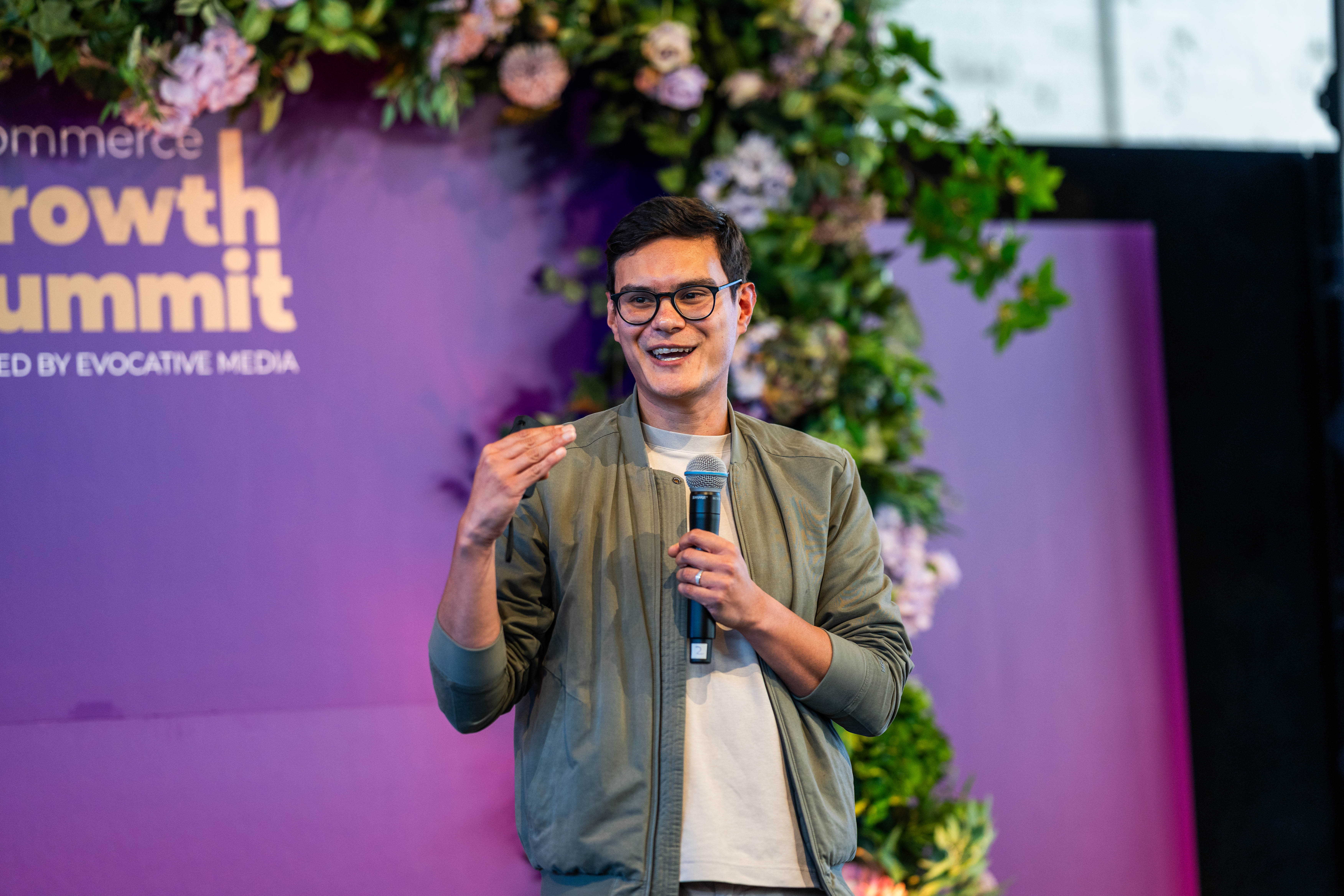
Chief of Staff at StudioHawk, Australia's largest dedicated SEO agency. Specialising in AI search visibility, technical SEO, and organic growth strategy. Leading a team of 120+ across Melbourne, Sydney, London, and the US. Book a free consultation →