AI search ROI is the return you earn from being cited and visible inside AI answers, and you measure it across three channels, not one click number. That is the whole problem stated once. The click that traditional SEO counted is vanishing into zero-click answers, so the old formula of traffic times conversion stops describing what actually happens.
I run AI SEO at StudioHawk and on my own site. Every number on this page comes from my own properties, not a borrowed benchmark, because the honest version is more useful than a made-up multiplier.
Here is the short version. One of my pages peaked at 1,776 Google clicks in a single month, then fell to 88. Judged on Google Search Console alone, that page is dead. It is not. In the same 28 days that Google sent it 77 clicks, Bing sent it 1,502, and it keeps getting cited inside ChatGPT. Three channels, one page, and only one of them was in the dashboard most people check.
What is AI search ROI?
AI search ROI is the return on the money and effort you spend being visible inside AI answers, spread across three separate channels: Google organic clicks, the Bing powered click channel that feeds ChatGPT and Copilot, and the AI citation channel where you get used as a source with no click at all. Traditional SEO ROI collapsed all value into one number, sessions, because one channel carried all the traffic. AI search splits that value three ways, and the biggest slice often never touches Google Analytics. Measuring it starts with accepting that a single click count is the wrong unit.
Why doesn't traditional ROI measurement work for AI search?
Traditional ROI measurement fails for AI search because the click it depends on no longer happens. AI Overviews and chat answers resolve the question on the results page, so the user gets the value and never lands on your site. The industry estimates that most AI referred visits arrive with no referrer header, which dumps them into direct or unattributed traffic in GA4. So the formula that served SEO for twenty years, sessions times conversion rate times value, measures a click channel that is shrinking while the influence channel it cannot see keeps growing. The fix is to measure each channel with the tool that can actually see it.
How do you actually measure AI search ROI?
You measure AI search ROI across three channels, each with a different tool, then add them up. Google clicks come from Search Console. The Bing powered click channel comes from Bing Webmaster Tools, and this is the one almost everyone skips. AI citations come from the Bing AI search report and your Cloudflare bot logs. Here is why skipping Bing is expensive.
That is one real page over 28 days. Google reported 77 clicks. Bing reported 1,502. Bing runs the index behind ChatGPT search and Copilot, so its click and impression data is the closest free proxy you have for AI driven visits that never announce themselves. Report on Google alone and you told yourself a page earning 1,579 clicks was earning 77. The citation channel sits on top of that: across my site, one grounding report counted 17,211 AI citations against 313 queries, two thirds of them live groundings inside assistant answers. None of those show up as a session anywhere. Once you can see all three, you can put a dollar figure on them.
What is the AI search ROI formula?
AI search ROI equals AI attributed value minus AI search investment, divided by that investment. The structure is the same as any ROI sum. The work is in the first term, because AI attributed value is the sum of the three channels: Google clicks plus Bing and AI referral clicks plus a modelled value for citations that influence a buyer before any click. Take the conversion rate and average deal value you already know from your other channels, apply them to the real click totals from Search Console and Bing Webmaster Tools, then add a conservative influence value for citation volume.
Rather than make you build the spreadsheet, I put the sum in a tool. Run your own numbers in the AI search revenue calculator and it returns a channel by channel estimate you can hand to a client or a board. The output is only as honest as the metrics you feed it, which is why the metrics come next.
Which metrics actually prove AI search ROI?
Four measured metrics prove AI search ROI, and none of them is a Google session on its own.
- Citation rate: how often AI answers cite you for the queries you care about. This is the leading indicator of the whole channel.
- AI referred sessions: the trickle GA4 does catch, from referrers like chatgpt.com and perplexity.ai. Small, but directional.
- Bing clicks and impressions: the free proxy for AI driven demand, straight from Bing Webmaster Tools.
- The crawler to assistant flip: in Cloudflare bot logs, a page moving from AI Crawler hits to AI Assistant hits marks the moment it went from being indexed to being cited live. That flip is the closest thing to a conversion event this channel has.
Track those four and you can defend the return even when the click number stays flat. The reverse is also true, and it is where most people get burned.
What does ignoring AI search visibility cost you?
Ignoring AI search visibility costs you the traffic that quietly leaves the one channel you watch. Here is the page from the top of this article, plotted month by month.
That page peaked at 1,776 Google clicks in October 2025 and bled down to 88 by June 2026. A team watching only Search Console reads that as a page to cut. A team watching all three channels sees that Bing and the citation channel held, so the page is still doing its job, just not through the door Google controls. The cost of ignoring AI search is not a smaller number on a chart. It is deleting assets that still earn, because your dashboard cannot see where they earn. Which raises the real question a business owner asks.
Is AI search optimisation worth the investment?
AI search optimisation is worth the investment when your buyers research inside AI tools before they buy, because those buyers spend more. A StudioHawk study of 100 Australian ecommerce brands over 21 months measured more than 20 times the revenue per session from AI search: 60 dollars or more per ChatGPT session against 2.65 dollars from Google organic, with the orders skewed to high consideration categories worth 900 to 2,500 dollars each. The return does not arrive as a flood of new sessions. It arrives as fewer, larger orders, plus citations that put you in the answer and Bing clicks Google never reports. If you want that measured and captured properly rather than guessed at, that is the job I do as an AI SEO consultant. Start with the calculator, then decide whether to build the capability in house or bring someone in.
Frequently asked questions
How do I track AI referred traffic in GA4?
You track AI referred traffic in GA4 by filtering acquisition reports for referrers like chatgpt.com, perplexity.ai and gemini.google.com, then treating the result as a floor, not the full number. Most AI visits arrive with no referrer, so GA4 undercounts the channel. Pair it with Bing Webmaster Tools for the fuller picture.
What is a good AI citation rate?
A good AI citation rate is any rate that climbs over time for the queries tied to your revenue. There is no universal benchmark yet, so measure your own baseline first, then optimise the pages that already get cited to get cited more. Absolute numbers matter less than the trend.
Does AI search ROI show up in Google Analytics?
AI search ROI shows up only partially in Google Analytics. GA4 captures the small slice of AI referred sessions that carry a referrer and none of the citation value that influences buyers without a click. Google Analytics is one input to AI search ROI, not the measurement itself.
How is AI search ROI different from SEO ROI?
AI search ROI differs from SEO ROI by counting citation and influence value that never becomes a session, where SEO ROI counts clicks and the conversions that follow them. SEO ROI is a single channel sum. AI search ROI is a three channel sum, and the largest channel is often the one with no clicks.
How these numbers were measured
The Google click figures come from Google Search Console via SEOtesting for /utm-source-chatgpt-explained/ (monthly, Apr 2025 to Jul 2026, and the trailing 28 days). The Bing figure of 1,502 clicks comes from Bing Webmaster Tools for the same page and 28 day window. The 17,211 citations across 313 queries come from a Bing AI search grounding report for lawrencehitches.com. The revenue per session figures come from the StudioHawk study of 100 Australian ecommerce brands across 8.35 million Google organic sessions and 340,000 ChatGPT sessions, July 2024 to March 2026. Real properties, measured values, no invented benchmarks.
Soaring Above Search
Weekly AI search insights from the front line. One newsletter. Six sections. Everything that actually moved this week, with a practitioner's take.
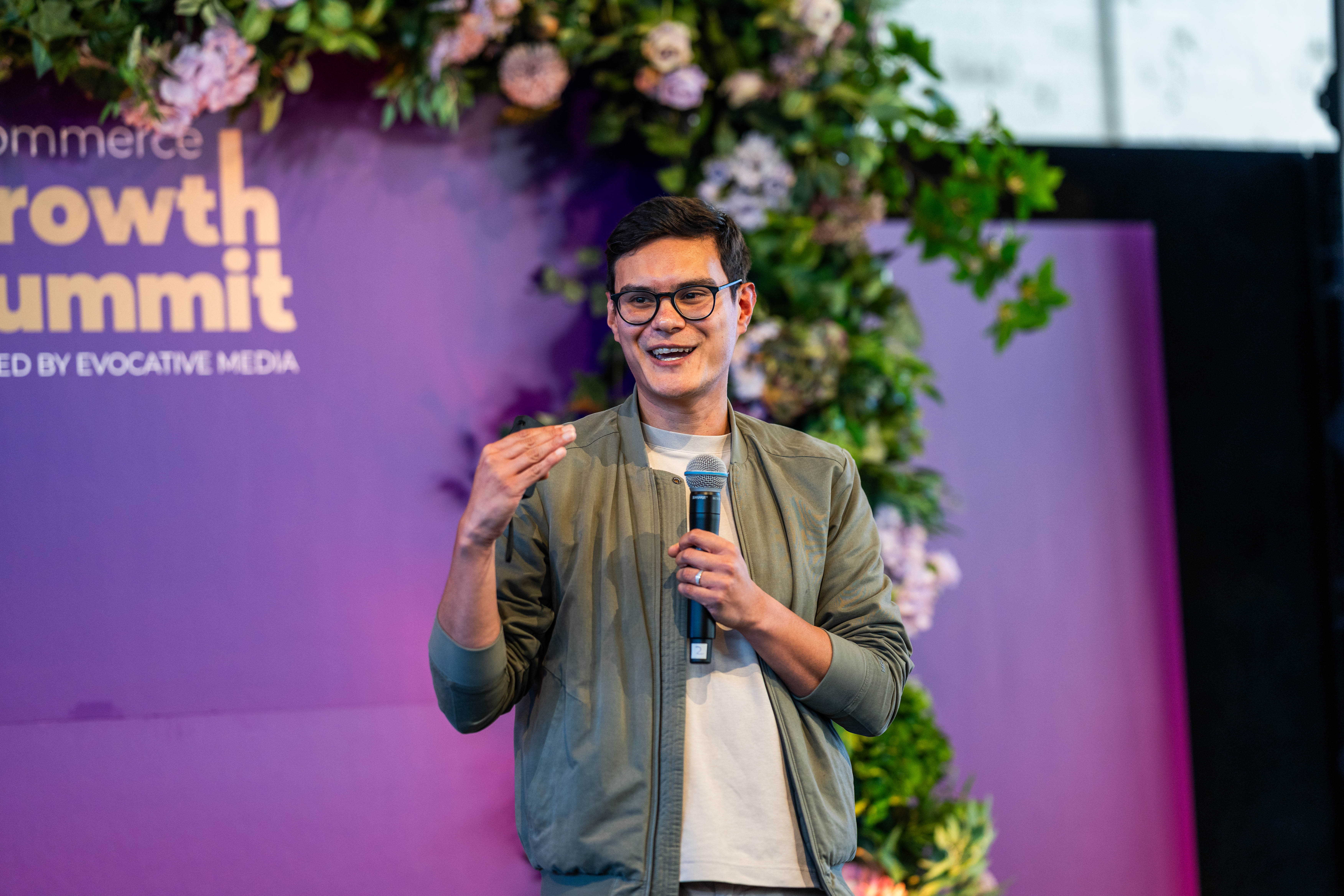
AI SEO consultant and AI search consultant helping brands appear in AI Overviews, AI Mode and ChatGPT. Chief of Staff at StudioHawk, Australia's largest dedicated SEO agency. Runs a measured three-channel playbook: Google, Bing and AI citations. Book a free consultation →