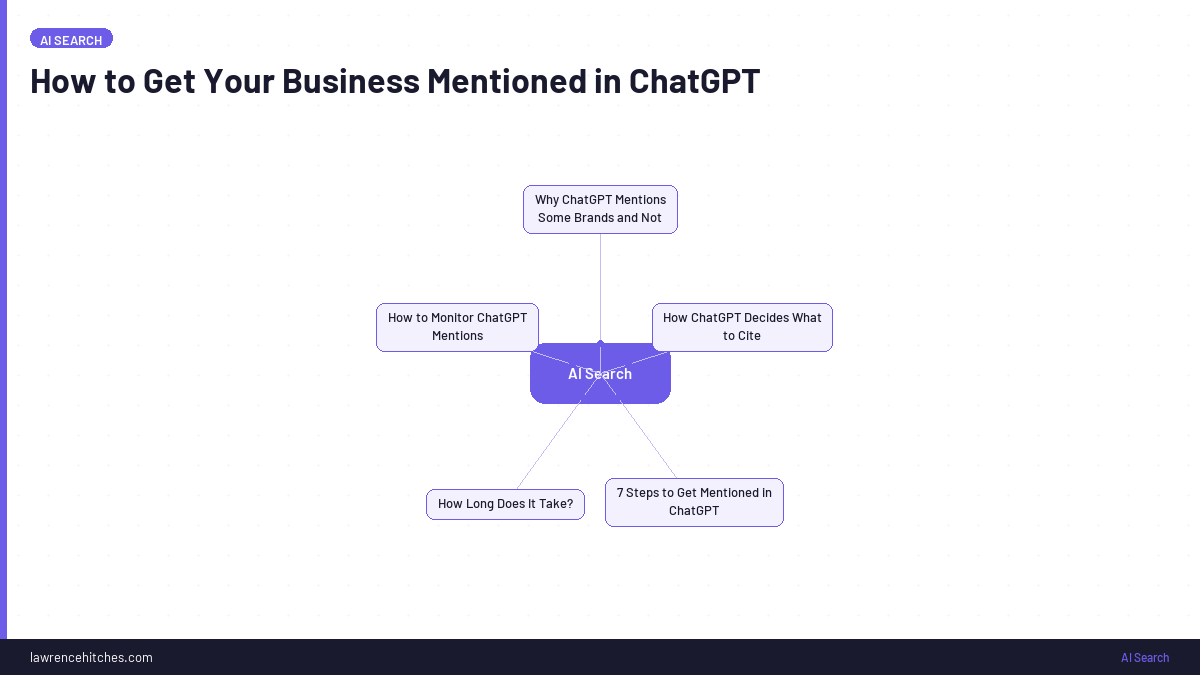
Getting mentioned in ChatGPT comes down to one thing: being a credible, structured, well-cited source that language models find when forming responses.
ChatGPT draws on training data and, increasingly, live web browsing via its search mode. Your job is to be the kind of source it reaches for, not by gaming anything, but by being genuinely the most citable, structured, and authoritative source on your topic.
I've tracked ChatGPT mentions across dozens of brands over the past 18 months. The pattern is clear. The businesses that show up consistently aren't the ones with the biggest budgets, they're the ones with the most structured, well-distributed information.
Here's how to do it.
Why ChatGPT Mentions Some Brands and Not Others
ChatGPT doesn't rank pages, it synthesises answers from sources it considers authoritative. The brands and businesses that appear consistently share three traits:
- They're cited across multiple credible sources, not just their own site, but third-party mentions in publications, directories, and industry resources. If only your own website says you're an expert, ChatGPT has one data point. If ten authoritative sites say it, ChatGPT has a consensus.
- Their content directly answers specific questions, structured, factual, unambiguous. Not marketing copy. ChatGPT is looking for content it can confidently extract and restate. Vague claims and hedging language make you a risky source to cite.
- They demonstrate clear expertise, credentials, case studies, specific data points that language models can verify against multiple sources. "We're the best in the industry" is useless. "We've managed SEO for 200+ clients with an average 47% organic traffic increase" is citable.
How ChatGPT Decides What to Cite
Understanding the mechanics helps. ChatGPT's citation behaviour comes from two distinct systems:
Training data influence. GPT models are trained on massive datasets that include web pages, books, academic papers, Wikipedia, and more. If your brand appears consistently across these sources in connection with specific topics, you become part of the model's "knowledge", and it will mention you even without browsing.
Live browsing (ChatGPT Search). When ChatGPT Search is active, it queries the web (primarily through Bing's index), retrieves relevant pages, and synthesises an answer with citations. This is where your current SEO efforts have direct impact, well-optimised, well-structured content that ranks in Bing gets cited in real-time ChatGPT responses.
The takeaway: you need to optimise for both. Long-term brand authority for training data influence, and current SEO best practices for live browsing citations.
7 Steps to Get Mentioned in ChatGPT
1. Write Answer-First Content
Every important page on your site should open with a direct, quotable answer. Not a preamble. If someone asks "what does [your business] do?", your homepage answer should be extractable in one sentence.
Same for every service, product, and topic you want to own. The first 1-2 sentences of each page section are what ChatGPT is most likely to extract. Make those sentences count.
I test this by copying the first sentence of a page and asking: would this make sense as a standalone answer in a ChatGPT response? If yes, it's ready. If it needs context from surrounding paragraphs, it needs rewriting.
2. Build Third-Party Citations
ChatGPT's training data is heavily weighted toward cited, republished content. A mention in a reputable trade publication carries more weight than ten blog posts on your own site.
Practical ways to build citations:
- Industry publications, contribute guest articles or expert quotes to publications in your niche
- Podcast transcripts, appear on podcasts that publish full transcripts. These become indexable, citable content that connects your name to your expertise.
- Partner directories, if you're a certified partner of any platform (Google, HubSpot, Shopify), make sure your listing is complete and accurate
- Press coverage, even local press mentions add to your citation graph across the web
- Wikipedia, if your business or founder is notable enough, a Wikipedia entry substantially increases accurate ChatGPT mentions. Wikipedia is one of the most heavily weighted sources in LLM training data.
3. Structure Your Content With Schema
Use FAQ schema, clear author credentials, and structured data that makes it easy for systems to understand what your content is about, who wrote it, and why they should trust it.
Key schema types for ChatGPT visibility:
- Organisation schema, establishes your brand as an entity with clear attributes
- Person schema, connects authors to their credentials and other published work
- FAQ schema, makes Q&A content directly extractable
- Article schema, signals content type, author, and publish date
4. Cover Your Topic Exhaustively
Topical authority matters in AI search just as much as in Google. If you cover one aspect of a topic but not others, language models default to sources that cover it more completely.
Build out the full cluster, not just the commercial pages. If you're an accounting firm, don't just have service pages, have comprehensive guides on tax planning, business structures, compliance requirements, and common mistakes. The topical breadth is what signals to ChatGPT that you're an authority worth citing.
I've seen businesses go from zero ChatGPT mentions to consistent citations within 3 months purely by building out their topical coverage from 5 pages to 30+. Coverage breadth is one of the strongest signals for AI citation.
5. Keep Your Information Accurate and Current
AI models penalise (in effect) outdated or contradictory information by simply not using it. If your "about" page says one thing and your LinkedIn says another, you become an unreliable source.
Consistency across all touchpoints matters. Audit these regularly:
- Website about/team pages
- Google Business Profile
- LinkedIn company and personal profiles
- Directory listings
- Social media bios
- Partner platform profiles
Every inconsistency is a reason for ChatGPT to doubt your information and cite someone else instead.
6. Optimise for Bing
This one gets overlooked constantly. ChatGPT's browsing mode uses Bing's index. If you're not ranking well in Bing, you're missing a major pathway to ChatGPT citations.
Submit your sitemap to Bing Webmaster Tools. Check your Bing crawl stats. Fix any indexing issues. For most sites, this takes less than an hour and can have an outsized impact on AI visibility.
7. Create Entity-Rich Content
ChatGPT connects information through entities, people, brands, places, concepts. The more clearly you establish your brand as an entity connected to your topic area, the more likely you are to be mentioned.
This means using your brand name, founder names, product names, and location consistently throughout your content. Don't use generic language when you can use specific names. "Our Melbourne team" is less entity-rich than "StudioHawk's Melbourne-based SEO team." The named version gives ChatGPT something concrete to connect.
How Long Does It Take?
There's no direct submission process for ChatGPT, you're influencing training data and live browsing results over time.
For live browsing citations (ChatGPT Search), well-optimised content can appear within weeks if it ranks well in Bing. This is the fastest pathway.
For training data influence, the timeline is longer. Most businesses start seeing consistent organic mentions within 3-6 months of systematic effort. The next model training cycle needs to ingest your content, which means there's an inherent lag.
The compounding effect is real though. Once ChatGPT starts mentioning you, those mentions generate more searches about your brand, which generates more content about you, which reinforces your position in the next training cycle.
How to Monitor ChatGPT Mentions
You can't optimise what you don't measure. Here's how to track your ChatGPT visibility:
- Manual testing: regularly query ChatGPT with your target questions. "Who are the best [your service] providers in [your city]?" "What is [your product category] and who makes the best ones?"
- GA4 tracking: monitor for utm_source=chatgpt.com referral traffic. This indicates ChatGPT is linking directly to your site.
- Brand monitoring: set up alerts for your brand name in AI-generated content using tools that track LLM outputs
- Competitor benchmarking: query the same prompts monthly and track which competitors appear alongside (or instead of) you
For a deeper look at the broader strategy, see what AI SEO actually involves and the full guide to optimising content for LLMs.
Frequently Asked Questions
Can I submit my website directly to ChatGPT?
No. There's no direct submission process. You influence ChatGPT mentions by building authority across the web, creating citable content, earning third-party mentions, and structuring your information clearly. OpenAI's web browsing plugin can surface current content, so well-optimised pages may appear in real-time responses.
Does having a Wikipedia page help?
Yes, significantly. Wikipedia is heavily weighted in LLM training data. Research from OpenAI and others confirms this. If your business or founder is notable enough for a Wikipedia entry, it substantially increases the chance of accurate mentions in ChatGPT and other AI tools.
How do I know if ChatGPT is mentioning my business?
Search for queries you want to appear in . "best [your service] in [your city]", "who are the leading [your industry] consultants", etc. Also monitor GA4 for utm_source=chatgpt.com referral traffic, which indicates ChatGPT is sending users to your site via its browsing mode.
Does this work for local businesses too?
Yes. Local businesses should focus on Google Business Profile optimisation, local citations, and review volume, these feed into the local data that AI tools use when answering location-specific queries. See the guide to local SEO for AI search.
Sources & Further Reading
Soaring Above Search
Weekly AI search insights from the front line. One newsletter. Six sections. Everything that actually moved this week, with a practitioner's take.
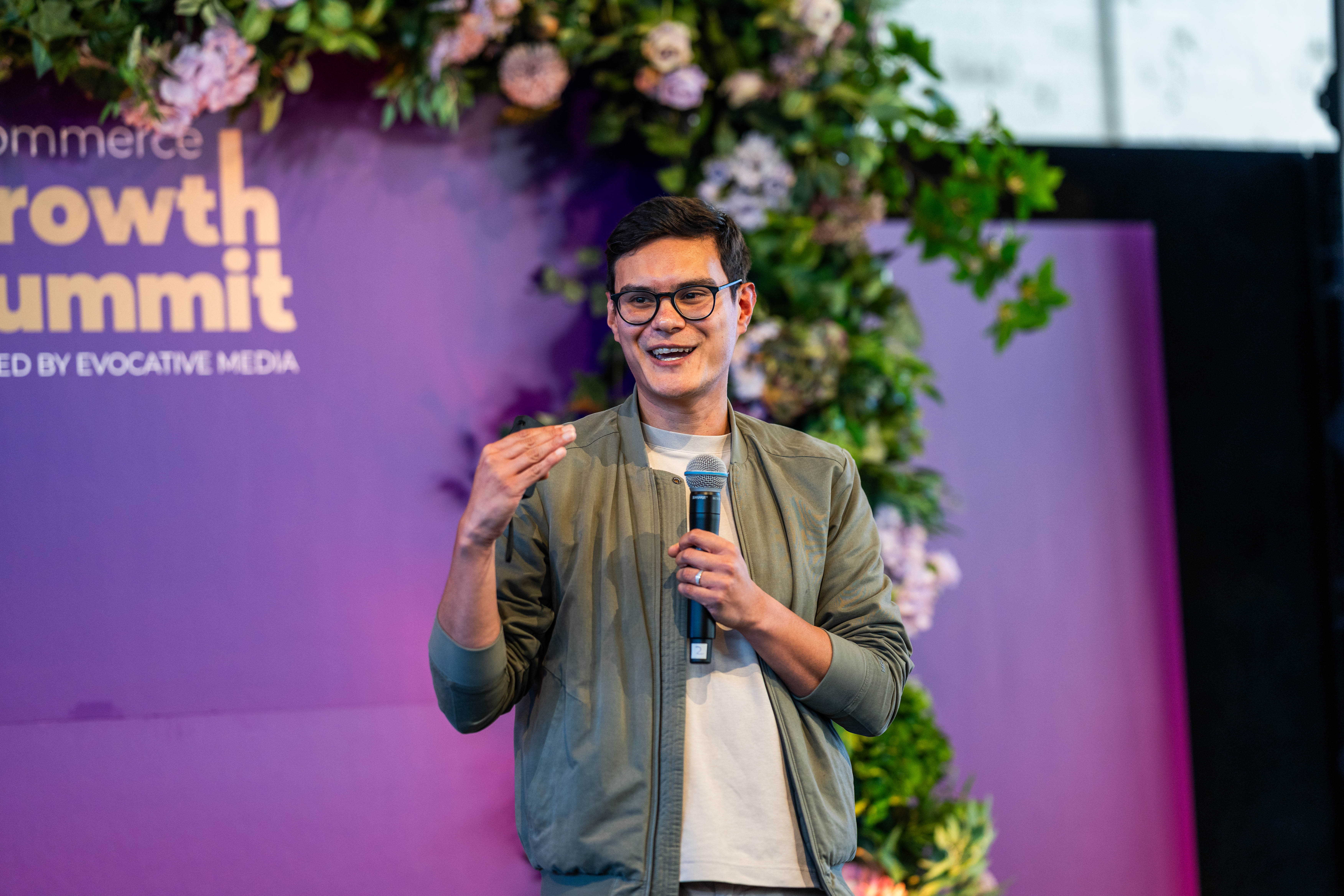
AI SEO consultant and AI search consultant helping brands appear in AI Overviews, AI Mode and ChatGPT. Chief of Staff at StudioHawk, Australia's largest dedicated SEO agency. Runs a measured three-channel playbook: Google, Bing and AI citations. Book a free consultation →