Most SEO advice tells you to "create great content" and "build backlinks." That worked in 2019. In 2026, Google runs over a dozen internal scoring systems that evaluate your site, your brand, your click patterns, and whether your content adds anything the top 10 results don't already say.
I've managed over 2,000 SEO campaigns at StudioHawk. Here's what actually moves rankings right now, stripped of the theory and ranked by impact.
The ranking factors that actually matter (in order)
Google uses hundreds of signals. But across 2,000+ campaigns, the same factors separate pages that rank from pages that sit on page 3. They stack into three tiers.
Tier 1: Non-negotiables
If any of these fail, nothing else you do will matter.
1. Match the query intent exactly
Google's ranking systems don't just match keywords. They match intent. If someone searches "emergency plumber Melbourne", your page needs a price range in the first 150 words. Not a 2,000-word essay on the history of plumbing.
Check the current top 5 results for your target keyword. If they're all product pages, don't publish a blog post. If they're all comparison guides, don't publish a single-product landing page. Google has already decided what format this query deserves. Match it or get filtered out before the real ranking signals even apply.
2. Technical baseline passes
The structural foundation. Every page needs all of these:
- HTTPS with valid SSL (Google won't rank HTTP pages competitively)
- Fast load times: LCP under 2.5 seconds, INP under 200ms
- Mobile-first design (Google indexes the mobile version of your site, not desktop)
- Crawlable HTML: critical content visible without JavaScript execution
- Canonical tags set correctly to prevent duplicate content issues
- Clean URL structure: short, descriptive slugs with the target keyword
This isn't glamorous work. It's also the reason most sites never rank. They skip the foundation and jump straight to content.
3. Title tag and H1 nail the keyword
Google has an internal metric called titleMatchScore that measures how well your title matches the search query. This is the single highest-leverage on-page element.
Front-load your primary keyword in the first 3 to 5 words. Keep it under 60 characters. Make it compelling enough to earn clicks, because click-through rate feeds directly into NavBoost (more on that below).
Your H1 tag should match or closely mirror the title. One H1 per page. No exceptions.
Tier 2: What separates #1 from #5
These are the factors that move you from "indexed and ranking somewhere" to "consistently in the top 3."
4. Topical authority around the page
One page alone rarely wins. Google's leaked code confirmed a variable called siteFocusScore that measures how tightly your site clusters around specific topics. A site about blackjack, card games, and online casino (tight cluster) outperforms a site with sections on blackjack, health supplements, and payday loans.
Topical authority means building a cluster: your target page plus 5 to 15 supporting pages covering subtopics, all interlinked. If you want to rank for "emergency plumber Melbourne", you also need pages on blocked drain repair, 24-hour plumber, plumber vs handyman, and hot water system installation.
This matters even more now that Google AI Mode decomposes queries into 8 to 12 parallel sub-queries. Pages that rank for multiple sub-queries are 161% more likely to earn AI citations. The topical map isn't optional anymore. It's the primary mechanism for visibility in AI-powered search.
5. Brand signals
Here's the uncomfortable truth most SEO guides skip.
Google holds a patent (US 9,031,929) for measuring what they call the Brand Search Ratio: the proportion of your site's total queries that are branded searches. It's one of the strongest quality signals in the entire system.
If nobody searches your brand name, Google has no reason to trust you over competitors who do get branded searches. This is why a local plumber with 500 monthly "[business name] plumber" searches will outrank a generic plumbing blog with 10x the content.
What to do about it: invest in digital PR that builds brand recognition. Get mentioned in industry publications. Build a presence on LinkedIn, YouTube, or podcasts. Direct traffic and branded search volume compound over time and lift every page on your site.
6. Click signals (NavBoost)
Google's NavBoost system, confirmed in antitrust testimony and the 2024 API leak, measures whether searchers click your result AND stay on your page.
Three metrics drive this:
- Click-through rate: does your title earn the click? Compelling titles with specific numbers, years, or qualifiers outperform generic ones
- Dwell time: does the user stay or bounce back to the SERP? Pogo-sticking (clicking a result then immediately returning) is a demotion signal
- Last click satisfaction: was your page the last result the user clicked before ending their search session? Being the terminal click is the strongest positive signal
This is why intent matching (Tier 1, point 1) feeds into everything. If your content doesn't satisfy the search, no amount of links or on-page optimisation will save you. Google is literally measuring user satisfaction in real time.
7. Information gain
Google holds a patent on information gain scoring: measuring whether your page adds novel information that other top-ranking pages don't already provide.
Open the top 5 results for your target keyword. Read them. Now ask: what can you say that they haven't? Original data, proprietary research, first-person experience, unique case studies, a contrarian take backed by evidence.
If your page is a rewrite of what's already ranking, you're bringing zero information gain. Google has no reason to show it. This is also why AI-generated content at scale fails. It's trained on existing content. By definition, it can't produce information gain.
Tier 3: Compounding advantages
These factors don't win rankings alone, but they compound over time and create defensible positions.
8. Links from topically relevant pages
Forget domain authority as a metric. Google's leaked code shows they evaluate links using the linking site's Normalised Site Rank (NSR), not a third-party metric like DR or DA.
One link from a page that actually ranks in your niche is worth more than 50 links from random high-DR sites that have nothing to do with your topic. A link from a page about blocked drains to your emergency plumber page carries far more weight than a link from a cooking blog.
And link location matters: in-body content links are weighted higher than sidebar, footer, or header links.
9. Structured data
Schema markup (Product, FAQ, HowTo, Article) won't directly boost your position. But it wins rich results, which dramatically increase CTR, which feeds NavBoost, which does boost position. It's an indirect ranking factor with a very direct mechanism.
It also feeds AI surfaces. Google AI Mode, ChatGPT, and Perplexity all process structured data more efficiently than raw HTML. In 2026, schema isn't just about rich snippets. It's about being citable by AI.
10. Content freshness (real updates, not date changes)
Google tracks whether content has been meaningfully updated. Simply changing the publication date triggers a syntacticDate deception flag. That's not freshness. That's a penalty risk.
Real freshness means adding new data, updating statistics, refreshing examples, adding new sections based on recent developments. Pages with genuine updates within the last 30 days perform measurably better than stale content.
What NOT to waste time on
These are the things I see SEO teams burning hours on that don't move rankings:
- Keyword density targets. Google uses semantic matching, not keyword counting. Write naturally. If you're counting keyword percentages, you're solving the wrong problem
- Buying random high-DR links. A DR 70 link from an irrelevant site does almost nothing. Worse, patterns of irrelevant links can trigger spam detection
- Publishing 100 thin pages to "cover" a topic. Google's content effort signals reward depth over breadth. Five excellent pages outperform 50 thin ones
- Obsessing over meta descriptions for rankings. They affect CTR, not position directly. Important, but not a ranking factor
- Chasing AI search tactics before fixing fundamentals. Non-Google AI crawlers can't even render JavaScript. If your site loads blank without JS, you're invisible to ChatGPT, Perplexity, and Claude regardless of what else you do
The honest timeline
If you're in a competitive niche, ranking #1 takes 6 to 12 months of compounding work across all three tiers. Anyone promising faster results is either targeting non-competitive keywords or using tactics that will get penalised.
Here's what a realistic quarter looks like:
This week:
- Audit your target page against the 10-point structural baseline (title, H1, URL, HTTPS, schema, canonical, meta, internal links, alt tags, OG tags)
- Check the top 5 results for your keyword. Does your page match the intent and format?
- Identify your information gain angle. What can you add that the top 5 don't have?
This month:
- Build 3 to 5 supporting pages around your target topic (the topical cluster)
- Interlink them properly: supporting pages link to the pillar, the pillar links to each supporting page
- Fix any technical issues: page speed, mobile usability, JavaScript rendering
This quarter:
- Earn 5 to 10 links from topically relevant sites (not random directories)
- Build brand signals: get mentioned in industry publications, speak on podcasts, grow branded search volume
- Refresh the page with new data, examples, and sections. Keep it alive
The bigger picture: what Google rewards in 2026
A study of 400+ websites across the last year of core updates (March 2025 through March 2026) found five characteristics that predict whether a site wins or loses organic traffic:
- Real products or services that solve problems
- Tight topical focus rather than covering everything
- Proprietary data or tools users can't get elsewhere
- Strong brand recognition with measurable branded search
- Task completion ability: the site lets users DO something, not just read
Pure content-only sites (affiliates, news aggregators, broad publishers) without products, tools, proprietary data, or brand equity are structurally disadvantaged. Google is increasingly rewarding sites that DO something over sites that only TELL something.
That's not a trend. It's the direction of every core update for the past 18 months.
Do You Actually Need Position 1 on Google?
Usually not: position 1 is often a vanity metric. If you sit at position three and the leads keep coming, the marginal cost of chasing the last two spots frequently beats the marginal return. The sixty-second case:
Watch the reel on Instagram: Is ranking number 1 a vanity metric
FAQ
How long does it take to rank #1 on Google?
For competitive keywords, expect 6 to 12 months of consistent work across technical SEO, content, links, and brand building. Low-competition long-tail keywords can rank within weeks. The timeline depends on your site's existing authority, the competition level, and how quickly you can build topical coverage.
Do backlinks still matter for rankings in 2026?
Yes, but quality has replaced quantity entirely. One link from a topically relevant page that actually ranks in your niche is worth more than 50 links from random high-authority sites. Google's systems evaluate the linking site's actual search performance (NSR), not third-party metrics like Domain Rating.
Can AI-generated content rank on Google?
Google doesn't penalise AI content for being AI-generated. It penalises content that lacks E-E-A-T signals: experience, expertise, authoritativeness, and trust. Since AI content is trained on existing material, it inherently struggles with information gain. The sites getting hit in core updates are the ones publishing bulk AI content without adding human expertise, original data, or first-person experience on top.
What is the most important ranking factor?
There's no single factor. But if forced to pick one, query intent match is the gatekeeper. If your page doesn't satisfy what the searcher is looking for, no amount of links, schema, or brand signals will save it. Get intent right first, then layer everything else on top.
Does Google AI Mode affect organic rankings?
AI Mode doesn't change your organic position directly. But it changes how much traffic that position delivers. Organic CTR for queries with AI Overviews dropped 61% in early 2026. The play now is to be cited BY AI Mode (brands cited in AI results earn 35% more organic clicks than non-cited competitors), which requires topical authority and content structured for snippet extraction.
Run a quick visibility check with Google search operators like site: to see exactly what Google has indexed before you optimise anything.
Watch: How to Rank #1 in Google's AI Search (7-Step 2025 SEO Plan)
Soaring Above Search
Weekly AI search insights from the front line. One newsletter. Six sections. Everything that actually moved this week, with a practitioner's take.
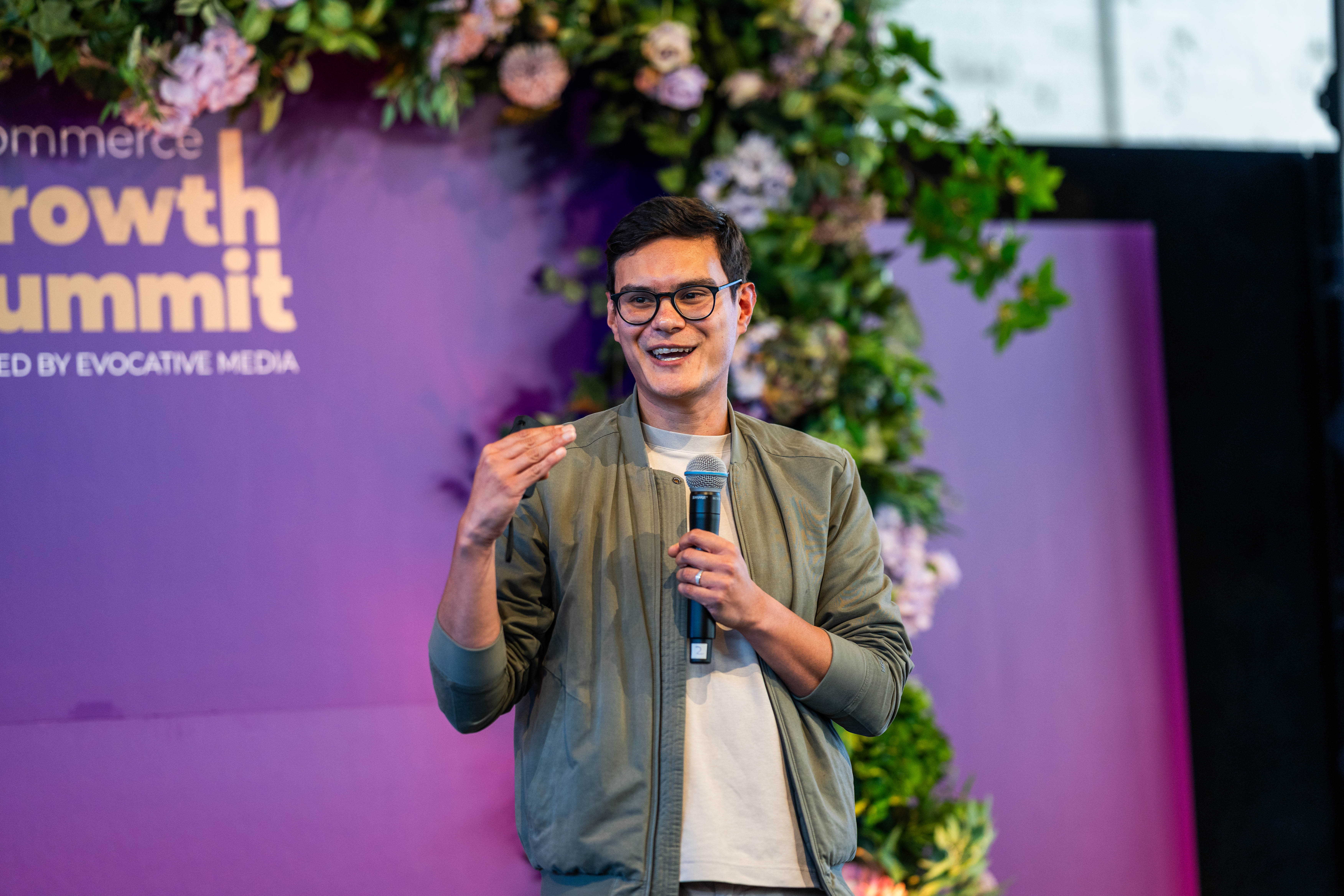
AI SEO consultant and AI search consultant helping brands appear in AI Overviews, AI Mode and ChatGPT. Chief of Staff at StudioHawk, Australia's largest dedicated SEO agency. Runs a measured three-channel playbook: Google, Bing and AI citations. Book a free consultation →