Pricing for AI SEO consulting varies wildly. One consultant charges $1,500 a month, another charges $15,000. Most of the variance comes down to one thing: whether you are paying for real AI SEO expertise or rebadged traditional SEO with updated slide decks. Here is what the tiers actually look like, what drives cost, and how to evaluate whether a quote represents genuine value.
The AI SEO market is at an early, noisy stage. Practitioners range from senior consultants who have been tracking citation mechanics since 2023 through to digital marketing generalists who attended one webinar about AI Overviews and updated their website copy. Both call themselves AI SEO consultants. The price gap between them reflects real differences in capability, not just positioning.
This page covers the four main engagement tiers, what drives cost within each, and the ROI framing you should be applying when evaluating whether the spend makes sense for your business.
The four main pricing tiers
Advisory or fractional: $2,000-5,000 per month
This tier covers regular strategic access without full execution. You get a senior practitioner reviewing your direction, answering questions, and guiding your in-house team or existing agency. The consultant is not running the work. They are directing it.
Best suited for: brands with an in-house content and technical team that can execute, but no senior AI SEO expertise to set direction. Also works well for brands early in the evaluation phase who want to understand the landscape before committing to a full retainer.
What you get: monthly or fortnightly strategy sessions, access to the consultant's frameworks and tools, citation audit review, content brief feedback, and on-call access for questions. What you do not get: execution. The consultant is not writing the content, implementing the schema, or doing the citation tracking themselves at this tier.
Watch for: advisory arrangements at the low end of this range from consultants who are not actively running AI SEO campaigns. There is a difference between a senior practitioner charging $3,000/month for fractional strategy and a generalist charging $2,000/month for monthly Zoom calls. Ask what their personal workload looks like and what they are actively running, not just advising on.
Retainer with deliverables: $5,000-15,000 per month
This is the most common tier for established brands with serious AI visibility goals. The consultant (or consultant-led team) runs the strategy and delivers a defined scope each month: citation audits, schema implementation, content structure work, entity graph updates, technical reviews, and reporting.
The range within this tier is wide because scope varies significantly. A $5,000/month retainer typically covers one person working part-time on your account: strategy, citation tracking, and content direction. A $15,000/month retainer typically covers a consultant-led team running content production, technical implementation, schema work, and reporting simultaneously.
Best suited for: brands actively building AI search visibility as a strategic priority, with budget to sustain an ongoing programme for 12 months. AI SEO compounds over time. A 3-month retainer rarely produces measurable citation lift. The brands getting the best ROI from this tier are running 12+ month engagements with consistent output.
What drives cost within this tier: whether execution is included or just direction, the number of markets or brands in scope, whether AI citation tracking infrastructure needs to be built from scratch, and the seniority of the consultant running day-to-day work (not just the face on the pitch call).
Project or audit basis: $3,000-10,000 fixed
A defined project with a defined deliverable. Most commonly: a full AI citation audit plus strategic roadmap, or a technical SEO and schema overhaul for a specific section of the site.
A citation audit at this tier should deliver: your current citation baseline across major AI engines, a gap analysis against competitors, a prioritised list of content and technical changes, and a 12-month execution roadmap. That is the minimum scope for a meaningful project engagement.
Best suited for: brands that need a baseline and roadmap before committing to an ongoing programme, brands evaluating whether AI SEO is a priority worth budgeting for, or brands with a specific technical debt item (poor schema, no entity graph, crawlability issues) that needs resolving before ongoing work makes sense.
What to watch for: project quotes at the low end of this range from consultants who are delivering a tool-generated report rather than actual strategic analysis. A $3,000 AI SEO audit that takes one afternoon to produce is a PDF of automated outputs with recommendations copy-pasted from a template. A real audit takes 2-4 weeks and involves manual query testing, competitor citation analysis, and hand-crafted recommendations.
Enterprise or agency hybrid: custom pricing
For large brands, multi-market operations, or businesses that need a consultant directing an agency team across multiple simultaneous workstreams. Pricing at this tier is scoped to the specific situation and typically starts at $15,000/month for the consulting layer alone, with agency execution costs on top.
The value here is having a named senior AI SEO consultant accountable for the strategy while an agency team handles throughput. This is the arrangement most brands at $10M+ revenue end up in because it separates strategic accountability from execution volume.
What actually drives cost
Technical expertise depth
The most expensive part of a real AI SEO engagement is the senior technical knowledge required to diagnose and solve the problems. Schema architecture, entity disambiguation, LLM retrieval mechanics, structured data for extractability, and crawlability for bot access all require genuine technical depth. Practitioners who have built this expertise over years of hands-on work charge appropriately for it. Those who have read about it charge less but deliver less.
If you are comparing two quotes and one is 40% cheaper, ask what technical work is included. Often the cheaper quote is content-only and the technical layer is absent. That is not a cost saving. It is a missing service.
Ongoing monitoring versus one-off audit
AI search is not a set-and-forget discipline. Citation patterns shift as AI engines update their retrieval systems. Competitors improve their entity authority. New queries emerge. An ongoing retainer includes continuous monitoring, adaptation, and reporting. A one-off audit does not. The price difference reflects the ongoing labour required to stay current and responsive, not just the upfront diagnostic work.
Whether AI citation tracking infrastructure is included
Building a citation tracking system from scratch takes meaningful time and expertise. Statistical citation tracking requires running 200+ queries per target keyword across multiple AI engines, normalising results, establishing statistical baselines, and building the reporting layer to track change over time. This is real engineering and analytical work. Consultants who include this in their scope charge more for good reason. Consultants who do not include it are leaving you without the ability to measure whether the work is succeeding.
Scope: single brand versus multi-market
A single-brand, single-market engagement in one language is materially less complex than a multi-market operation with regional entity graphs, multiple hreflang configurations, and citation tracking across different AI engine behaviours in different geographies. Scope drives cost. Make sure quotes are scoped to your actual situation, not a simplified version of it.
Why cheap AI SEO pricing is a red flag
Anyone charging $500/month for AI SEO is not doing AI SEO. At that price point, the economics only work with mass-templated content production, automated tool reports, and zero genuine analytical work. The math does not allow for statistical citation tracking, manual entity-graph work, or senior strategic thinking. What you are buying is traditional SEO content production with AI buzzwords in the reporting.
This matters because spending $6,000 a year on a service that is not actually running AI SEO methodology does not produce AI search visibility. It produces content. That content may or may not rank on Google. It will not move your citation share in AI engines, because citation share requires the specific technical and structural work the $500/month tier cannot deliver.
The floor for real AI SEO consulting, with actual citation tracking, entity work, and technical depth, is around $3,000 for a one-off project and $5,000/month for ongoing retainer work. Below that, validate very carefully what is actually included before signing.
The ROI framing you should be applying
The business case for hiring an AI SEO consultant does not rest on rankings. It rests on being present at the moment a buyer is using an AI tool to make a purchase decision, and your competitor is cited while you are invisible.
Consider the Bing conversion signal. Bing traffic converts at roughly 2-3x Google's average conversion rate in many B2B categories. This is partly because Bing's audience skews older and more enterprise-oriented, and partly because Bing search intent is often more specific. Bing now powers ChatGPT search and Microsoft Copilot. If your brand is invisible on Bing and in Bing-powered AI tools, you are missing a high-converting audience that your competitors may already be capturing.
If a consultant can move you from invisible to cited in your primary category across AI engines in 12 months, and that category drives even 5-10 qualified leads per month at average deal values above $10,000, the consultant's annual fee pays back on the first two clients. The ROI calculation is not about the cost of the consulting. It is about the cost of AI search invisibility while your competitors compound their citation authority.
A useful framing: what is one competitor citation worth in your category? If a buyer asks an AI tool "who should I hire for [your service]?" and your competitor is named while you are not, that is not a ranking miss. It is a consideration miss at the exact moment of decision. The cost of being absent from that moment compounds over every query in your category, every day, across every AI tool the buyer uses.
Getting a quote that reflects the actual work
When you request pricing from an AI SEO consultant, ask for a scoped breakdown that specifies:
- What citation tracking methodology is included and how frequently it runs
- Whether schema and entity-graph work is in scope or an additional cost
- Whether technical SEO audit and implementation is included
- Who specifically does the day-to-day work (senior consultant or delegated junior)
- What reporting looks like and what metrics are tracked
- What the minimum engagement term is and why
A consultant who cannot answer all six clearly is either not running the work or has not done it at the level the quote implies. The right answer to each question is specific, not general. "We track visibility" is not a methodology. "We run 200+ queries per target keyword across four AI engines monthly and track citation rate against a baseline" is a methodology.
Frequently Asked Questions
Is AI SEO consultant pricing typically charged monthly or per project?
Both models exist. Monthly retainers are more common for ongoing work because AI SEO compounds over time and requires continuous monitoring, adaptation, and execution. Project engagements suit specific one-off needs: a citation audit, a schema overhaul, or a strategy document. Many engagements start as a project to establish a baseline, then convert to a retainer once the strategic priorities are clear. Ask what model the consultant recommends and why, it tells you how they think about the work.
Why is there such a wide range in AI SEO consultant pricing?
The market is early and unregulated. Anyone can call themselves an AI SEO consultant. Pricing reflects the difference between practitioners who have built real citation tracking systems, run structured entity-graph work, and operated across 50+ brands, versus generalists who have updated their service menu to include "AI SEO" without substantively changing their methodology. Use the scope checklist in this page to evaluate whether a quote reflects the actual work.
Do I get a discount for a longer engagement term?
Some consultants offer reduced monthly rates for 12-month commitments versus month-to-month. Whether this is worth taking depends on how confident you are in the fit after the initial discovery process. AI SEO results take 6-12 months to compound meaningfully, so a 12-month commitment aligns with realistic outcome timelines. If a consultant is only offering month-to-month with a premium, that is fine. If they are only offering long-term contracts with no trial period, that warrants more scrutiny.
What should be included at the $5,000/month retainer level?
At $5,000/month you should expect: monthly strategy sessions with a senior practitioner, citation tracking across major AI engines, content direction and brief creation, schema review and recommendations, and a monthly report that tracks real metrics, not vanity indicators. If the deliverables list at this price point is vague or omits citation tracking entirely, the scope is underspecified or the methodology is not there. See how I structure AI SEO consulting engagements for a transparent breakdown of what each tier covers.
Can a smaller business justify AI SEO consultant pricing?
Yes, with the right engagement model. A $3,000-5,000 one-off audit and strategy document gives a smaller business the roadmap and baseline without committing to an ongoing retainer. If the internal team can execute the recommendations, that is often the right starting point. The ongoing retainer model makes sense once the strategic priorities are clear and the business has the budget to sustain 12 months of consistent execution. Starting with a project engagement is lower risk and still produces measurable value.
Soaring Above Search
Weekly AI search insights from the front line. One newsletter. Six sections. Everything that actually moved this week, with a practitioner's take.
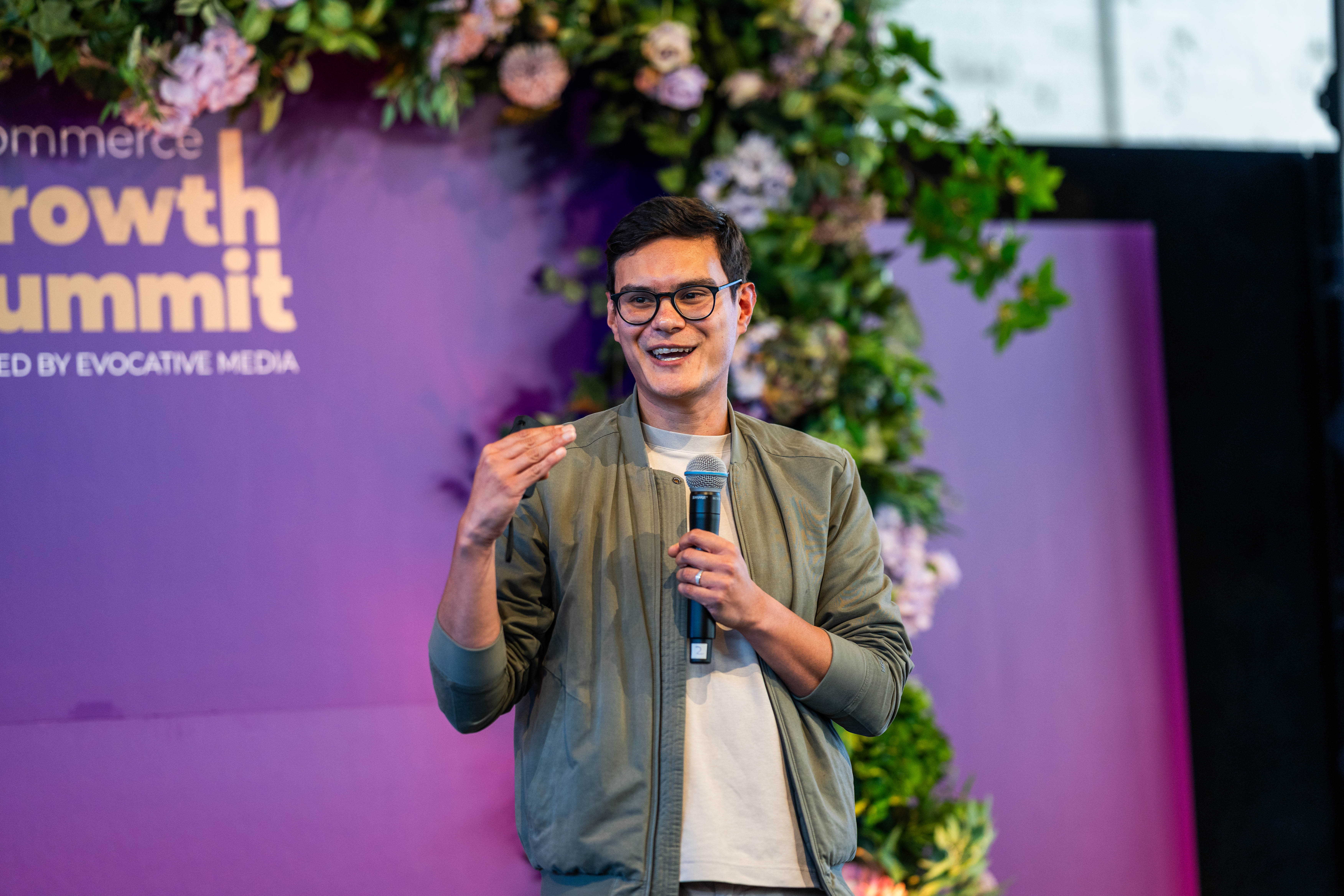
Chief of Staff at StudioHawk, Australia's largest dedicated SEO agency. Specialising in AI search visibility, technical SEO, and organic growth strategy. Leading a team of 120+ across Melbourne, Sydney, London, and the US. Book a free consultation →