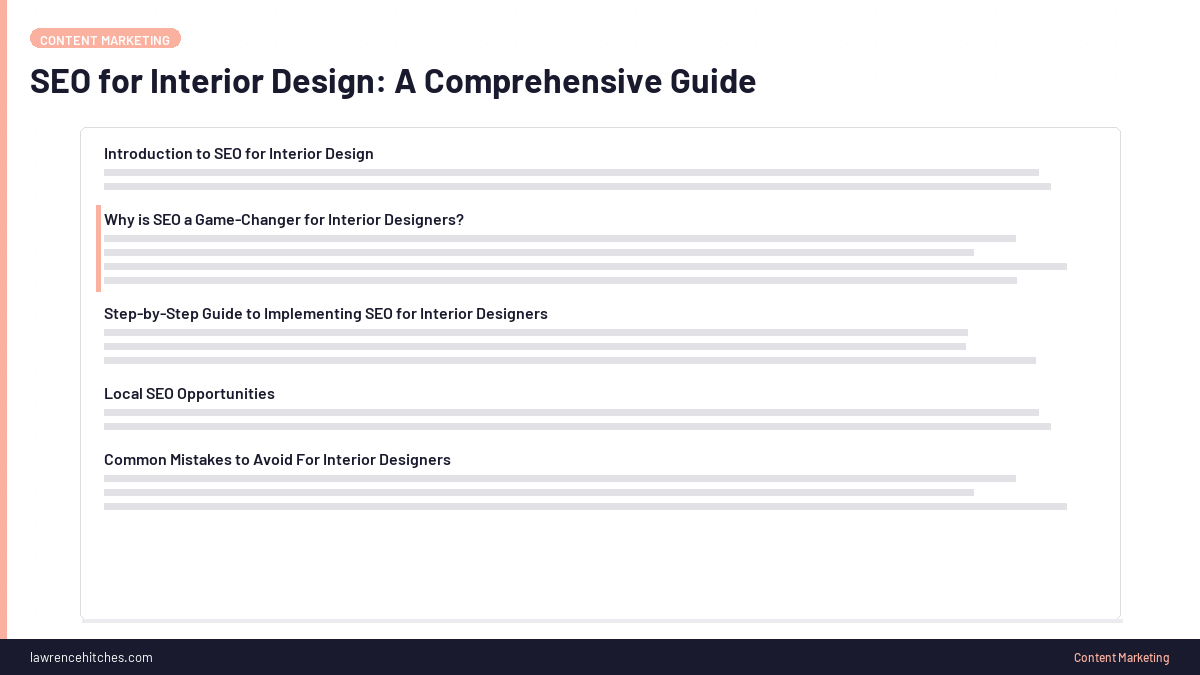
In the vibrant realm of interior design, where artistry seamlessly blends with practicality, having a robust online footprint is more than just a luxury-it's essential. With the ever-changing dynamics of the digital world, the significance of Search Engine Optimization (SEO) for our interior design mavens has never been more pronounced. Taking a leaf out of the books of industry trailblazers, let's embark on a journey to unravel the nuances of SEO, specially crafted for the design world.
Introduction to SEO for Interior Design
Much like how a thoughtfully designed room breathes life into a house, making it a cozy home, adept SEO has the magic to elevate a website from just another page on the internet to a magnet for potential clients. In the world of interior design, where every visual speaks a thousand words, fine-tuning your online presence isn't just a good-to-have-it's paramount.
Why is SEO a Game-Changer for Interior Designers?
In the bustling digital marketplace, countless talented designers are vying for attention. How do you ensure your designs don't just blend into the background? SEO is your spotlight, ensuring your masterpieces get the recognition they deserve.
Connecting with the Right Crowd: SEO isn't just about attracting clicks-it's about attracting the right ones. With a well-optimized site, you're more likely to draw in visitors genuinely captivated by your design ethos, leading to meaningful engagements and higher conversion rates.
A Stamp of Credibility: A top spot on search engine results isn't just a position; it's a badge of trust. When potential clients see you ranking high, it boosts your credibility.
Step-by-Step Guide to Implementing SEO for Interior Designers
Keyword Research
Step 1: Start with brainstorming. Think about terms your potential clients might use when searching for design services.
For example: "eco-friendly home decor," "sustainable furniture materials,"
Step 2: Use tools like Google's Keyword Planner or SEMrush to identify high-ranking keywords related to interior design.
Step 3: Analyze the competition. See which keywords your competitors are ranking for and identify gaps in your content.
Quality Content Creation
Step 1: Identify topics that resonate with your audience. This could be design trends, project showcases, or design tips.
Write blog posts on "How to Choose Sustainable Materials for Your Home" or "The Benefits of Eco-Friendly Furniture."
Step 2: Write engaging, informative, original content around these topics.
Showcase sustainable design projects with detailed case studies, emphasizing the sustainable elements used.
Step 3: Incorporate the keywords from your research naturally within the content.
Mobile Optimization and UX Considerations
Step 1: Test your website's mobile responsiveness using tools like Google's Mobile-Friendly Test.
Example: Imagine a potential client is browsing your site on their smartphone, looking for "minimalist living room designs." If images of your designs take too long to load or don't fit the screen properly, you might lose a potential lead.
Step 2: If your site needs to be mobile-friendly, consider redesigning it using responsive design practices.
Example: Ensure that your portfolio images are adaptable. A large, landscape-oriented image of a spacious open-concept kitchen might look great on a desktop but could get cut off on a mobile device. Opt for responsive image galleries that adjust based on the device.
Step 3: Regularly check the site on different devices to ensure a consistent user experience.
Example:
- Periodically, view your site on various devices, from smartphones to tablets.
- Check how the virtual tours of your designed spaces play on mobile or if the client testimonial videos are easily viewable without any lag.
- Ensure navigation menus, especially those leading to key sections like "Our Projects" or "Design Testimonials," are easily accessible and user-friendly.
Backlink Building for Interior Design
Step 1: Identify reputable websites, blogs, or industry experts in the interior design space.
Example: Research popular home decor magazines like "Architectural Digest" or "Elle Decor." Look for interior design bloggers with a significant following, such as "Apartment Therapy" or "Design*Sponge." These platforms have audiences that appreciate good design and can be potential sources of backlinks.
Step 2: Reach out to them with personalized emails, proposing collaborations or guest post opportunities.
Example: Craft a personalized email to "Apartment Therapy" proposing a guest post titled "Maximizing Small Spaces: Modern Design Solutions." Highlight a recent small-space project you completed, emphasizing the unique design challenges you overcame.
Step 3: Create high-quality content for these collaborations, ensuring a backlink to your website.
Example:
- Once your guest post proposal is accepted, write an engaging article showcasing before-and-after photos of your project.
- Discuss the design process, the challenges faced, and the solutions implemented.
- At the end of the article, include a call-to-action that directs readers to a related project showcase on your website, ensuring you get a valuable backlink.
Local SEO Opportunities
Step 1: Claim and optimize your Google Business Profile listing. Ensure all details, like address and phone number, are accurate.
Example: If your interior design studio is located in Brooklyn, New York, make sure that the address on your Google Business Profile listing matches precisely with the address on your website. Include high-quality images of your studio space, recent projects, and any design awards you've received.
Step 2: Encourage satisfied clients to leave positive reviews on your Google Business Profile and other relevant platforms.
Example: After completing a home renovation project for a client, send them a personalized thank-you email. In the email, include a link to your Google Business Profile listing and kindly ask them to share their experience by leaving a review. Highlighting a specific aspect of the project, like "We'd love to hear your thoughts on the new open-concept kitchen design!" can make the request more personal.
Step 3: Optimize your website content for local keywords, such as "interior designer in [City Name]."
Example: If you primarily serve clients in San Francisco, ensure that your website content includes phrases like "top interior designer in San Francisco" or "San Francisco-based design studio." Create a dedicated page on your website showcasing local projects, titled "Our San Francisco Design Portfolio," to emphasize your local presence.
Common Mistakes to Avoid For Interior Designers
Being Too Design Focused: From experience working with people in creative industries, their vision for a website can conflict with a pragmatic approach to SEO, be conscious of large images, javascript, and visual elements that can bloat page speed and impact crawlers being able to read the HTML code.
Overusing Keywords: While keywords are essential, stuffing your content with them can lead to penalties from search engines.
Ignoring Analytics: Tools like Google Analytics provide valuable insights into your website's performance. Ignoring these metrics can mean missed opportunities for optimization.
Neglecting Social Media: Social media platforms are powerful tools for driving traffic to your website. Ensure your profiles are active and engaging.
Interior Design SEO Case Study
Cantilever Interiors, who provides custom kitchen designs. Their digital presence, though aesthetically pleasing, needed to be making waves in search engine rankings.
Armed with a well-considered SEO strategy, we fast-forward 12 months. They earned a top spot for "custom kitchen design."
By implementing the steps above, the impact was an increase in their overall SEO value to search engines, thus rewarding them with solid rankings. Year on year, they increased 95.83% in goal conversion.
Final Word:
SEO is the unsung hero for interior designers. With the right strategies, it can transform your online presence, bringing in more clients and establishing your brand in the industry. Remember, in interior design, just as every detail matters in space, every aspect of your online presence counts.
Related Reading
Sources & Further Reading
Enjoying this? The 60-second versions live on Instagram.
Follow @lawrenceaiseo →Soaring Above Search
Weekly AI search insights from the front line. One newsletter. Six sections. Everything that actually moved this week, with a practitioner's take.

AI SEO consultant and AI search consultant helping brands appear in AI Overviews, AI Mode and ChatGPT. Chief of Staff at StudioHawk, Australia's largest dedicated SEO agency. Runs a measured three-channel playbook: Google, Bing and AI citations. Book a free consultation →