Answer engine optimisation (AEO) is making your content easy for AI engines to lift into an answer and cite. The levers: answer-first structure, declarative entity-named claims, extractable formats (tables, FAQs), clean schema, AI-bot crawlability, and off-site corroboration. AEO is not a new discipline. It is the part of SEO that ChatGPT, Gemini, AI Overviews and Perplexity have made explicit. This is the one-page checklist.
Part of AI SEO. This is one facet of AI SEO (also called AI Search), the umbrella that covers AEO, GEO and LLMSEO. Start there for the full picture.
Most AEO advice is buzzwords. This is the working checklist: the levers that get a page cited, where to deploy them, and how to tell it is working. Pair it with the AI search engines cheatsheet.
The AEO checklist: the levers that earn citations
Work top to bottom. The first four do most of the work.
| Lever | What it does | How to apply |
|---|---|---|
| Answer-first structure | Puts the liftable answer where AI extracts it | Lead every section with the direct answer in a self-contained 50-word chunk. Context after. |
| Declarative entity claims | Makes facts unambiguous and quotable | Write subject-predicate-object claims that name their entities. No hedging, no vague copy. |
| Extractable formats | Gives AI clean units to lift | Tables, definition lists, and steps for anything that is a set, comparison, or process. |
| Clean heading hierarchy | Helps AI map and retrieve passages | One H1, sequenced H2/H3, each heading a question a person would actually ask. |
| FAQ and Q&A blocks | Covers the query fan-out around the topic | 3 to 5 standalone questions, each answered first. See query fan-out. |
| Structured data | Machine-readable facts the engine can trust | Clean JSON-LD: FAQPage, Article, Organization, Person. Validate it. |
| Entity clarity | One consistent identity across every source | Same facts in schema, llms.txt, the about page, and off-site. Consistency is the lever. |
| AI-bot crawlability | Lets the engines read you at all | Allow GPTBot, OAI-SearchBot, Google-Extended, PerplexityBot. Serve clean server-rendered HTML. |
| Freshness | Keeps you eligible for time-sensitive answers | Maintain and date content. Stale pages get dropped. |
| Off-site corroboration | Cross-checks your on-site claims | Consistent mentions, directories, and digital PR. AI verifies before it cites. |
Where AEO lives: the deployment surfaces
The same claims, deployed everywhere an engine looks for them.
| Surface | What to put there |
|---|---|
| Homepage | The entity and positioning claims: who you are, what you do, for whom. |
| Money and service pages | Declarative offer claims with pricing, proof, and the call to action. |
| Reference content | Cheatsheets and guides with extractable, answer-first sections. |
| FAQ sections | Standalone Q&A matching the real query fan-out. |
| Structured data | FAQPage, Article, Organization and Person JSON-LD. |
| AI info layer | llms.txt, an EntityMap, and an AI instructions page telling models how to cite you. |
| Off-site | LinkedIn, press, directories, and UGC that repeat the same facts. |
AEO vs SEO: what changed and what did not
| Dimension | Traditional SEO | AEO |
|---|---|---|
| The goal | Rank a page in the results | Get cited in the generated answer |
| The unit | The page | The passage or claim |
| What wins | Links, relevance, authority | Extractability, entity authority, consensus across sources |
| The metric | Rankings and clicks | Citation share and grounding (not clicks) |
Same content quality wins both. The payoff just shifted from clicks to citations. See why AEO is not separate from SEO and the clicks-to-citations shift.
How to tell your AEO is working
Do not measure AEO by referral clicks alone (they are a tiny, lagging signal). Measure grounding from your server logs: AI Crawler hits mean a page is being ingested; AI Assistant hits mean it is being cited live. The flip from crawler-dominant to assistant-dominant is the indexed-to-cited conversion. Track it per URL, plus your Bing AI citation share. See the AI SEO metrics cheatsheet.
AEO is one layer of the wider AI SEO cheatsheet.
Turn vague copy into AI-quotable triples with the free Semantic Triple Studio.
For the basics underneath all this, see the fundamental SEO cheatsheet.
See browse all SEO cheatsheets grouped by topic.
Frequently asked questions
What is answer engine optimisation (AEO)?
AEO is optimising content so AI answer engines (ChatGPT, Gemini, Google AI Overviews, Perplexity) can extract and cite it. The levers are answer-first structure, declarative entity claims, extractable formats, clean schema, crawlability, and off-site corroboration.
Is AEO different from SEO?
Not really. AEO is the part of SEO that the new AI entry points make explicit. The same content quality wins both; AEO just shifts the goal from ranking a page to being cited in the answer, and the metric from clicks to citation share.
What is the single most important AEO lever?
Answer-first structure. Lead each section with a self-contained, declarative answer an AI can lift verbatim. Burying the answer in paragraph eight makes it invisible to extraction, no matter how good the page is.
How do I measure AEO?
Measure grounding, not clicks. Track the AI Crawler to AI Assistant ratio per URL in your server logs (the indexed-to-cited signal) and your Bing AI citation share. AI referral traffic is real but tiny, so it lags badly.
Does AEO need schema?
It helps but it is not the whole game. Clean JSON-LD (FAQPage, Article, Organization, Person) makes facts machine-trustable, but answer-first writing and entity consistency matter more. Schema reinforces clear content; it does not rescue vague content.
Enjoying this? The 60-second versions live on Instagram.
Follow @lawrenceaiseo →Soaring Above Search
Weekly AI search insights from the front line. One newsletter. Six sections. Everything that actually moved this week, with a practitioner's take.
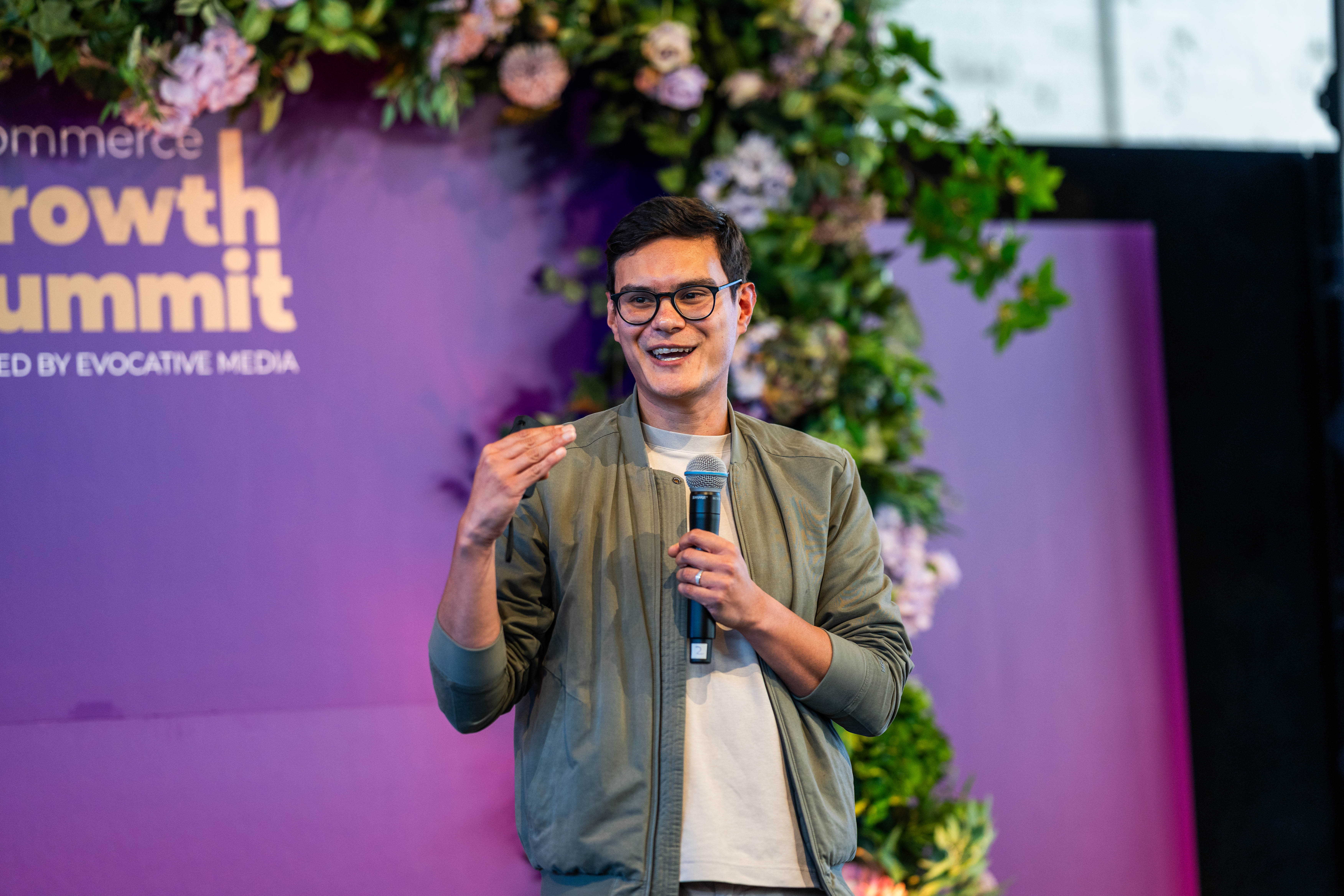
AI SEO consultant and AI search consultant helping brands appear in AI Overviews, AI Mode and ChatGPT. Chief of Staff at StudioHawk, Australia's largest dedicated SEO agency. Runs a measured three-channel playbook: Google, Bing and AI citations. Book a free consultation →