A traditional SEO consultant focuses on ranking your pages in Google's 10 blue links. An AI SEO consultant works on both blue-link rankings and citation visibility inside AI-generated answers from ChatGPT, Perplexity, Google AI Overviews, Claude, and Microsoft Copilot. The technical foundation overlaps heavily. The optimisation layer above it is fundamentally different.
This is the question I get most often when businesses are deciding who to hire. They have an existing SEO agency or freelancer. Their content is ranking. But traffic is flat or declining, and they are not sure if they need a different kind of help.
Here is the honest comparison, with the actual practical differences in scope, methodology, and pricing.
At a glance
A traditional SEO consultant optimises for Google blue-link rankings. An AI SEO consultant optimises for both rankings and citation visibility inside AI answers (ChatGPT, Perplexity, AI Overviews, Claude, Copilot). The technical foundation overlaps; the measurement and optimisation layer above it is different.
| Area | Traditional SEO consultant | AI SEO consultant |
|---|---|---|
| Primary KPI | Keyword rankings, organic traffic | Rankings + AI citation share + branded search |
| Measurement layer | GSC, rank tracker, analytics | GSC + rank tracker + citation tracking + GA4 AI referrals |
| Content brief | Keyword-density checklist | Answer-first, extractable, FAQ-marked, entity-threaded |
| Schema scope | Article, FAQPage, Product | Full entity graph: Person, Organization, Service, LocalBusiness, Speakable, with @id references |
| Off-site work | Link building | Link building + earned media + Wikidata/Knowledge Graph + sameAs reinforcement |
| Crawler scope | Googlebot, Bingbot | Googlebot + Bingbot + GPTBot, ClaudeBot, PerplexityBot, Google-Extended |
| Reporting cadence | Monthly position updates | Monthly positions + citation share + AI referral traffic |
| Typical retainer | $80K-$150K/yr AUD | $150K-$250K/yr AUD |
Where the work overlaps
First, the part most articles get wrong: AI SEO consulting is not a replacement for traditional SEO. It is an additional layer built on top of strong traditional foundations.
Both disciplines depend on the same underlying technical work:
- Site architecture and URL structure
- Crawlability and indexability
- Schema markup (the foundation of entity signal)
- Page speed and Core Web Vitals
- Internal linking with varied anchor text
- Content quality and topical depth
- E-E-A-T signals via named authorship
If a consultant tells you AI SEO is unrelated to traditional SEO, walk away. They have not actually done the work. Aleyda Solis confirmed experimentally that an unindexed page is invisible to ChatGPT regardless of how well-structured it is. Pages need to rank in Google's top 10 to enter the LLM retrieval pool. That is a traditional SEO problem.
Here is the proportion that matters: 88% of ChatGPT's brand citations come from the general web index, not from any AI-specific source pool. Traditional SEO is the entry filter for 88% of citations. If your traditional SEO is not strong, no amount of "AEO" work will compensate.
Strong traditional SEO is the entry ticket. Strong AI SEO is what wins the citation share once you are in the pool.
Where the work diverges
This is where most agencies have not caught up. The optimisation layer above the technical foundation looks very different in 2026 from how it looked in 2022.
Traditional SEO consultant focus:
- Keyword research and ranking targets
- On-page optimisation for keyword-driven SERPs
- Link building and authority transfer
- SERP feature optimisation (featured snippets, People Also Ask)
- Local pack and Google Business Profile work
- Technical SEO audits
- Content gap analysis based on keyword data
AI SEO consultant focus (in addition to all of the above):
- AI citation auditing across ChatGPT, Perplexity, Claude, Gemini, Copilot
- Content structure for LLM extractability (answer-first writing, FAQ schema, Speakable markup)
- Entity-graph engineering (canonical Person and Organization with @id references, sameAs arrays, knowsAbout properties)
- Topical cluster planning explicitly for citation share, not just rank share
- Cross-domain entity reinforcement
- llms.txt, robots.txt audits for GPTBot, ClaudeBot, PerplexityBot, Google-Extended access
- Citation pattern monitoring as a measurement layer
- Wikidata and Knowledge Graph entity claiming
The methodology is different. The deliverables are different. The reporting is different. AI referral traffic in GA4 is now part of the standard report. Branded search growth becomes a primary KPI. Citation share inside AI answers becomes a category-share metric.
The 18-month timeline: when each discipline became necessary
For context on how quickly the field has shifted:
- October 2024: ChatGPT Search launched. AI SEO became a real but emerging discipline.
- May 2025: Google rolled out AI Overviews to all US searches. Citation visibility became commercially material in B2C verticals.
- September 2025: Perplexity passed 100M MAUs. Referral traffic from claude.ai and perplexity.ai became measurable in GA4 for most B2B brands.
- March 2026: AI Overviews now appear on 30%+ of Australian commercial queries. AI search traffic is no longer trivial in any major category.
If your existing SEO consultant signed your contract before October 2024 and has not visibly evolved their methodology since, you are working with a 2024 playbook in 2026 conditions. The gap is now material.
Three signs your existing SEO consultant has not adapted
If any of these are true on your account, you are with a traditional consultant who has not yet evolved.
1. Reporting is keyword-rankings only. If your monthly report shows position movement on a keyword tracker but no view of AI citation visibility, AI Overview presence, or LLM source distribution, you are getting 2019-era reporting in 2026.
2. The strategy doc has no entity work in it. Strong AI SEO engagements include explicit entity-graph work: canonical schema, sameAs arrays, cross-domain reinforcement. If none of that appears in your strategy, the consultant is not doing it.
3. Content is being optimised for keyword density, not extractability. A 2022 SEO content brief and a 2026 AI SEO content brief look completely different. The 2026 version leads with the answer, structures around extractable Q-and-A, and threads named-entity references through the body. If your content briefs still read like keyword-density checklists, the methodology has not been updated.
What an AI SEO consultant adds in practice
To make this concrete: here is what gets added on top of a typical traditional SEO engagement when you bring in an AI SEO consultant in Melbourne or anywhere else.
Month 1 to 2: AI citation audit across the five major engines. Documentation of where the brand is and is not cited, with each gap turned into a content brief. Schema audit. Entity-graph design. robots.txt and llms.txt confirmation.
Month 2 to 4: Content structure pass on the existing top 20 pages. Schema upgrades. New supporting articles in the topical cluster. Cross-domain entity reinforcement (the brand on LinkedIn, Wikidata, partner sites, all linked through sameAs).
Month 4 to 6: Citation share tracking. Refinements based on what is and is not earning citations. Iteration on the cluster.
Month 6 onwards: Compounding. By this point the cluster is in place, the technical foundation is solid, and citation share starts climbing. The work shifts to maintenance, expansion into adjacent topical clusters, and ongoing measurement.
None of this replaces traditional SEO work. It runs alongside it. A good consultant does both, or works with a traditional SEO partner to cover both layers.
Pricing comparison
The price point shifts up because the scope is wider, but not dramatically.
Traditional SEO consultant retainer: typically $80K to $150K AUD per year for a senior independent consultant in Australia. Project work $3K to $15K depending on scope.
AI SEO consultant retainer: typically $150K to $250K AUD per year. The wider scope plus the higher level of senior expertise required moves the price point up. Project work $5K to $25K. Audits sit at the lower end, full strategy and execution at the higher end.
The price difference reflects two things: the scope of the work is broader (citation auditing, entity engineering, cross-domain reinforcement add real time), and the pool of consultants who can actually do AI SEO at a senior level is narrow. There are still very few practitioners who have run AI search work across 50+ businesses. The market reflects that scarcity.
When traditional SEO is genuinely enough
Not every business needs an AI SEO consultant in 2026. There are categories where traditional SEO still does most of the work.
Hyper-local services with thin AI penetration. If your customers are searching "plumber in [suburb]" and getting served the local pack on Google, AI search penetration in that category is still low. Traditional local SEO will move the needle more than AI SEO investment for the next 12 to 24 months.
Established brands with strong existing earned media. If your brand already has substantial third-party coverage, named authorship, and a solid content cluster, you are probably already getting cited reasonably well in AI answers. The AI SEO ROI is real but lower than for brands building from scratch.
Pre-product-market-fit startups. If you do not yet have a clear category or buyer journey, AI SEO is premature. Traditional SEO foundations first, AI SEO once the category is defined.
For most ecommerce, B2B SaaS, professional services, and consumer brands targeting national or international markets, AI SEO is now table stakes.
Side-by-side comparison table
How to decide which one you need
Three quick diagnostic questions.
Has your traffic plateaued or declined despite stable rankings? Classic sign of zero-click compression and AI answer cannibalisation. Bring in an AI SEO consultant.
Is your category seeing AI Overviews more than 30% of the time? Run your top 20 commercial queries through Google. If AI Overviews are appearing on more than 30% of them, you cannot afford to skip the AI SEO layer.
Are competitors in your category getting cited inside ChatGPT, Perplexity, or Claude when you are not? Run 20 prompts. Document the citation gap. If competitors are in 60%+ of responses and you are in less than 30%, the work is overdue.
If any of those is yes, you need AI SEO consulting. Either bring it in alongside your existing traditional SEO partner, or hire a consultant who covers both layers.
Skip the re-prompting with the Claude skills for SEO, free and open source.
Frequently asked questions
Can my existing SEO agency just learn AI SEO?
Some agencies have adapted well. Most have not. The fastest test: ask your agency for a citation audit of your brand inside ChatGPT, Perplexity, and Claude. If they cannot produce a structured report inside two weeks with documented methodology, they have not done the work yet. You can either upskill them (slow) or bring in an AI SEO consultant alongside them.
Is AI SEO just SEO with a new label?
No. The technical foundation overlaps significantly, but the methodology, deliverables, measurement, and reporting are distinct. Anyone selling "AEO" as the same SEO deck with rankings replaced by citations is not doing the actual work. Read the breakdown of why AEO is not just SEO with new metrics.
Should I hire one consultant who does both, or two specialists?
One consultant who does both, where possible. The disciplines are tightly coupled. Splitting them creates communication overhead and missed coordination on technical work that affects both layers. Look for someone who can show you both kinds of work in their portfolio.
How long until AI SEO becomes mandatory rather than optional?
For most categories, it already is. AI Overviews now appear on roughly 30% of commercial queries in Australia, growing month over month. ChatGPT, Perplexity, and Claude referral traffic combined now account for measurable share of new business inquiries for B2B brands. Brands that wait 12 more months will be playing catch-up to competitors who built the cluster early.
Where do I start?
Get a citation audit. Either commission one from an AI SEO consultant or run one yourself across 20 category-relevant prompts in ChatGPT, Perplexity, and Claude. The audit alone tells you whether you have a real visibility gap or whether your traditional SEO is already serving you well in the AI layer. From there, the right next step is obvious. Talk to an AI SEO expert if you want it run for you.
Soaring Above Search
Weekly AI search insights from the front line. One newsletter. Six sections. Everything that actually moved this week, with a practitioner's take.
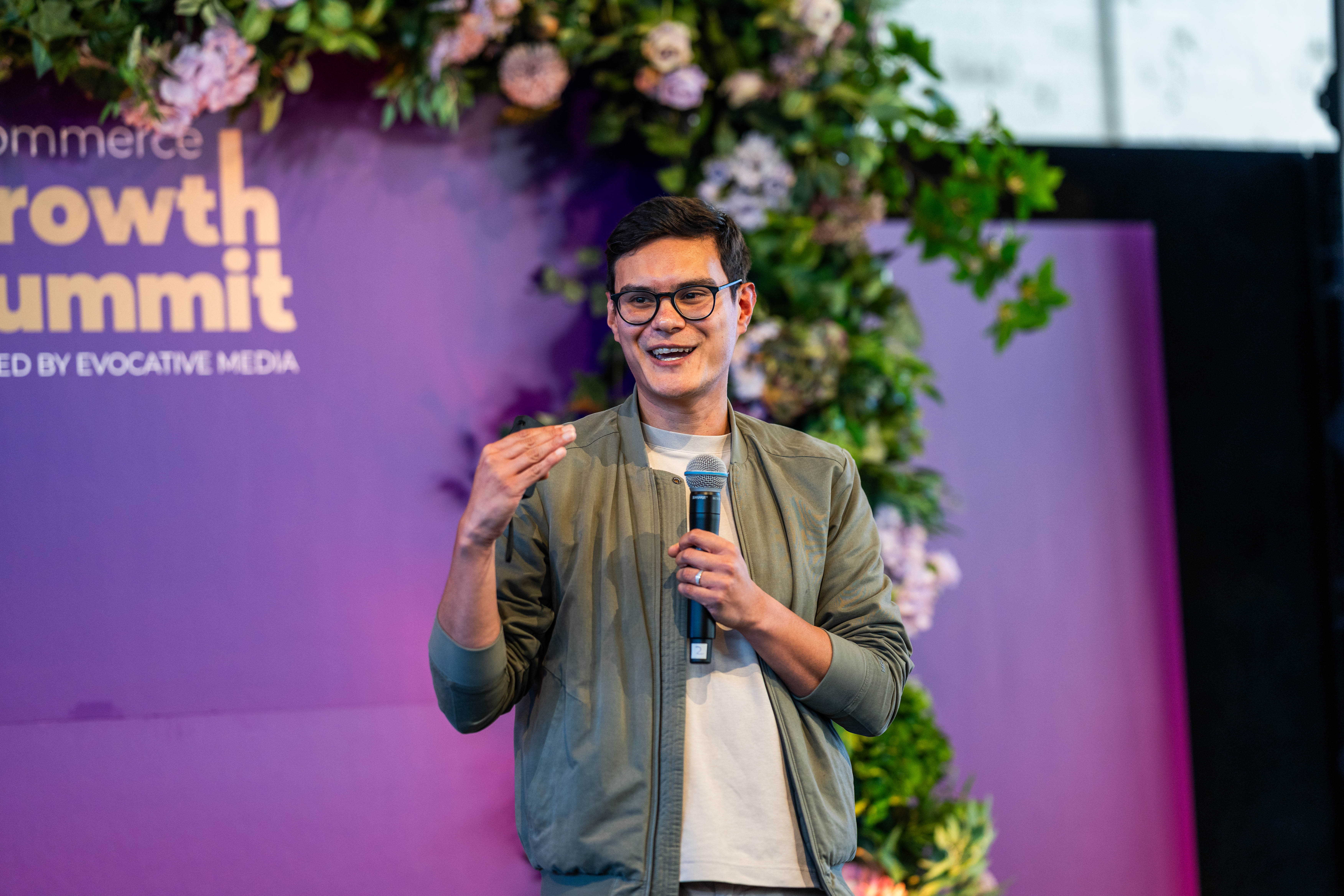
Chief of Staff at StudioHawk, Australia's largest dedicated SEO agency. Specialising in AI search visibility, technical SEO, and organic growth strategy. Leading a team of 120+ across Melbourne, Sydney, London, and the US. Book a free consultation →